Scan and plan
An intraoral scan records the teeth. Dr. Julian Restrepo reviews the bite, plans the movements, and orders a custom series of trays.

Patient guide
Daily wear, tray changes, tracking, and the right next step when an attachment or aligner has a problem.
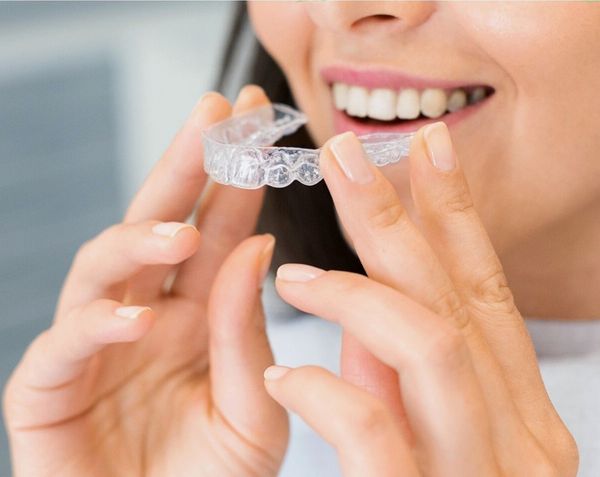
What to expect
Aligner treatment may be a little shorter than braces, but timing depends on the bite, tooth movement, tracking, and daily wear.
An intraoral scan records the teeth. Dr. Julian Restrepo reviews the bite, plans the movements, and orders a custom series of trays.
Each tray moves the teeth a small step. Wear the trays 20 to 22 hours a day. Most patients change every 7 days and some every 14 days. Follow the case-specific instructions from the doctor.
The doctor checks tray fit, attachments, bite, and tracking. Bring the current tray so the fit can be checked in the mouth.
A refinement is a new set of trays made after the first series to fine-tune teeth that need more movement. Refinements are a normal opportunity to improve the result, not a sign that treatment failed.
When active movement is complete, retainers help hold the result. One pair of retainers is included with aligner treatment. Follow the wear schedule provided.
Daily care
Aligners only move teeth while they are worn.
Take the trays out only for meals, snacks, drinks other than plain cool water, brushing, flossing, and cleaning the trays. Do not change early. If wear time is missed, stay in the current tray and call if you are unsure whether the change day should move.
Rinse with cool or lukewarm water. Brush gently with a separate soft toothbrush and clear mild liquid soap. Toothpaste can scratch the trays. Never use hot water. Store aligners in their protective case whenever they are out.
Tracking
Tracking means each tooth is moving into the space built into the tray. Look from the front and both sides, especially at the biting edges of the front teeth.
A thin line can appear when a new tray is first inserted, but it should improve as the tray seats. Do not move to the next tray while a visible gap remains.
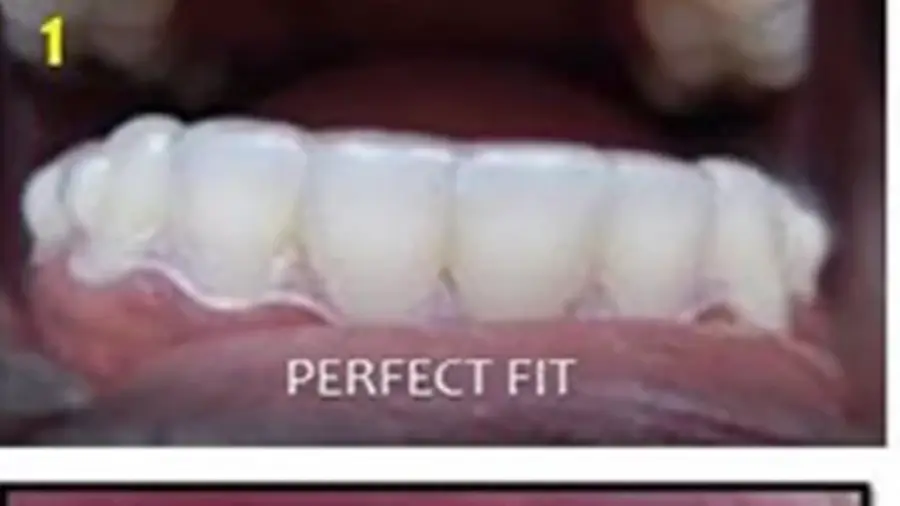
The plastic follows every tooth closely, with no visible air space at the biting edges.
Photo reference: Wired Orthodontics
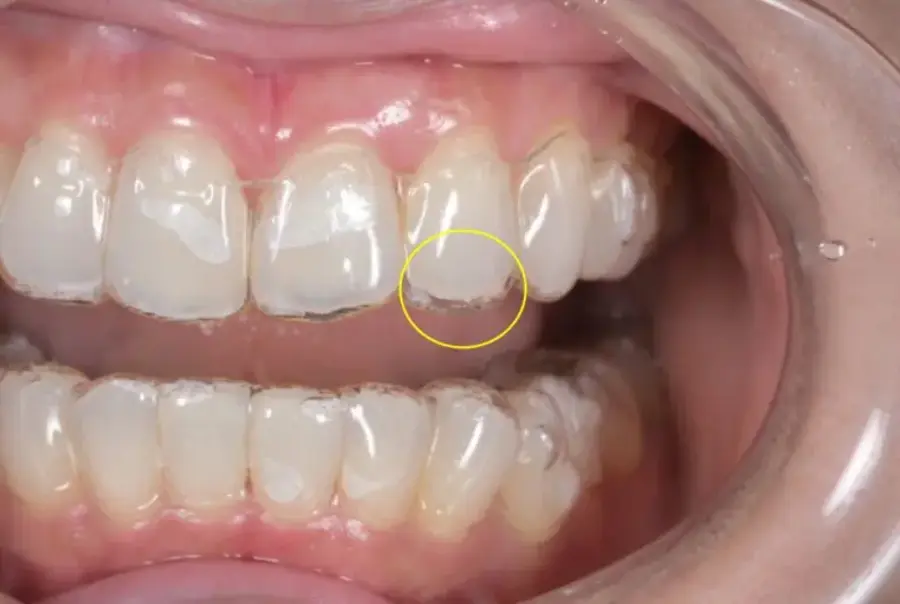
Stay in the current tray longer until it seats fully. Use chewies as instructed and keep checking the gap. Call if it does not close.
Photo reference: Himeji Invisalign
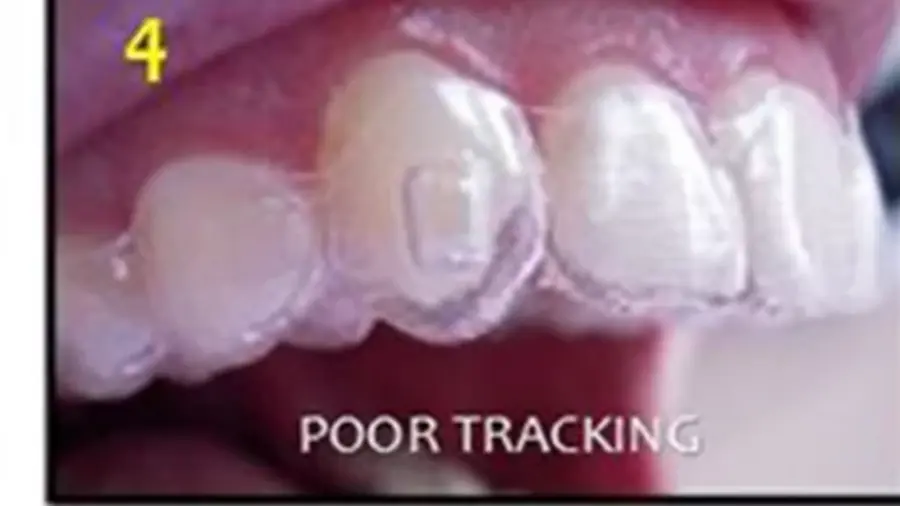
Do not advance. Keep the current and previous trays, and call the office for instructions.
Photo reference: Wired Orthodontics
With the aligner in place, bite gently on the chewie over each area that is not fully seated. Move it from tooth to tooth rather than chewing in one spot. Use it exactly as instructed, clean it after use, and replace it when it starts to break down.
Troubleshooting
Keep the current and previous trays. Do not skip ahead or attempt a home repair.
If the tray still seats fully and feels comfortable, keep wearing it. Call and identify the tooth and current tray. Do not use glue or reshape the tray.
Do not skip ahead. Keep your previous trays and call. The doctor will tell you whether to wear the previous tray, move forward, or wait for a replacement.
If the tray remains in one piece, has no sharp edge, and still fits, keep wearing it and call for instructions. Do not bend, glue, or cut it.
Stop forcing it into place. Keep the damaged tray and the previous tray, then call before changing anything.
Confirm that it is the correct tray and facing the right direction. Press it in with clean fingers and use a seating aid if instructed. If a gap remains, return to the last tray that fits comfortably and call. Do not jump ahead.
Stay in the current tray. Call if you are unsure whether the change day should move or whether more time is needed.
When to call us
Call or leave a message at (562) 904-6930. Walk-ins are welcome, but call first to confirm the office is open.
For uncontrolled bleeding, major facial trauma, or trouble breathing or swallowing, call 911.