Orthodontics in Downey, CA

Braces, clear aligners, and the retainers that hold the result. Your orthodontic consultation is free.

X-rays or a 3D scan, if needed, are billed separately.

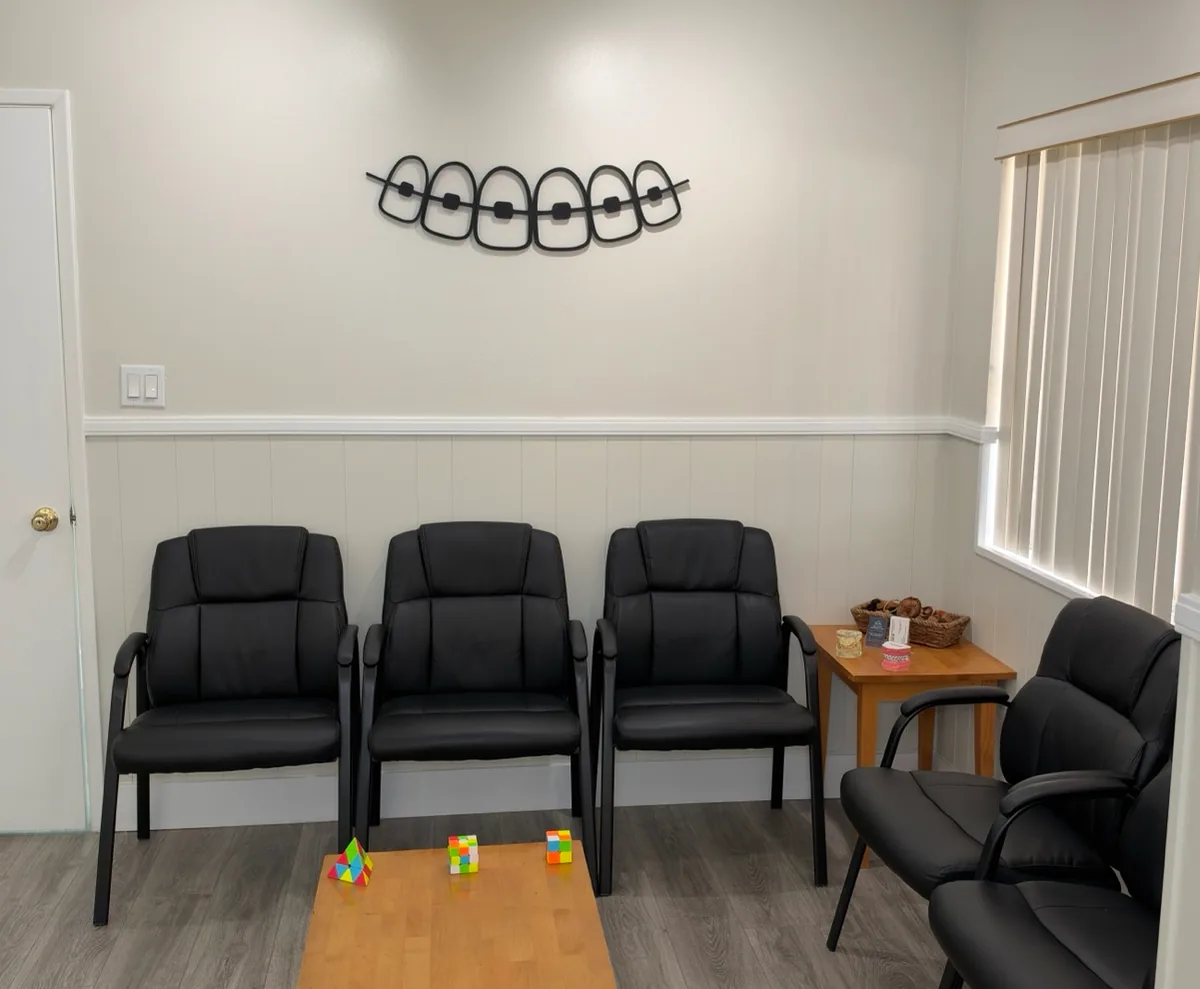
Waiting room at Maribel Brand DDS Inc., with braces wall art and seating

Braces

Braces use brackets and wires to guide the teeth into a healthier bite. They can treat most alignment and bite problems, including complex ones.

Typical length
12 to 24 months
Adjustments
About every 4 weeks
Placement
1 to 2 hours
Numbing
Not usually
What it is

Small brackets are bonded to the front teeth and premolars. Each molar gets either a bonded tube or a metal band, which holds the end of the archwire. Treatment starts with a thin, round nickel-titanium wire that levels and aligns with gentle force, then moves to rectangular wires for precise control of the bite and the finishing details. The bone around the roots reshapes as teeth move, which is why it takes months, not days.

At adjustment visits your doctor changes the wire, elastics, or small auxiliaries. You pick new colored bands every visit: clear or silver to keep it quiet, team colors if you don't. We offer metal and ceramic brackets. Both move teeth the same way. Ceramic is less visible but slightly more fragile.

Benefits
  • Braces can handle the complex cases: crowding, rotations, deep bites, large gaps, and bite corrections that removable options cannot manage predictably.
  • Your doctor controls each tooth individually and can move a single tooth in a specific direction, which matters when a bite needs detailed finishing.
  • There's no wear schedule to keep. Braces work around the clock, so progress doesn't depend on remembering.
  • Teens and adults both do well with braces. Age matters less than the health of the teeth and gums, which your doctor checks at your consultation.
What to expect

Your free orthodontic consultation covers whether braces fit your bite and your goals. If you move forward, the next step is records: photos, X-rays, and a digital scan of your teeth, which your doctor uses to plan the case.

Placement takes one to two hours and doesn't usually need numbing. Teeth feel tight, and soreness starts that evening and lasts a few days. Soft foods and over-the-counter pain relief, as directed, get most people through it.

After that you return about every 4 weeks for adjustments, with a few sore days after each. When treatment ends, the brackets come off, the teeth are polished, and a retainer holds the result.

Good to know
  • Brushing and flossing take more effort around brackets and wires. A water flosser or interdental brushes help.
  • Hard, sticky, and chewy foods are off the menu while they can break brackets. A broken bracket usually means an extra visit to fix it.
  • Soreness after placement and adjustments is normal and temporary. For sharp pain, a poking wire, or a loose bracket, call or text the office.

Risks of not treating it

Crooked teeth and bite problems rarely correct themselves. Over time they can cause uneven wear and chipping, and crowded teeth are harder to keep clean. What starts as mild crowding can become a bigger correction later.

Questions, answered

How long does braces treatment take?

Often 12 to 24 months, though it varies with the complexity of the case. Your doctor gives you a personal estimate at your consultation, based on your bite and your records.

Do braces hurt?

Placement itself is usually not painful, but expect soreness for a few days after the braces go on and after each adjustment. Soft foods and over-the-counter pain relief, as directed, are usually enough.

What should I do if a bracket breaks or a wire pokes?

Call the office for guidance. Keep any loose piece, do not try to fix it at home, and cover a poking wire with orthodontic wax until you are seen.

Dental term: archwire. The wire that runs through the brackets and applies the steady pressure that moves the teeth. It starts thin and round, and progresses to rectangular wires as treatment advances.

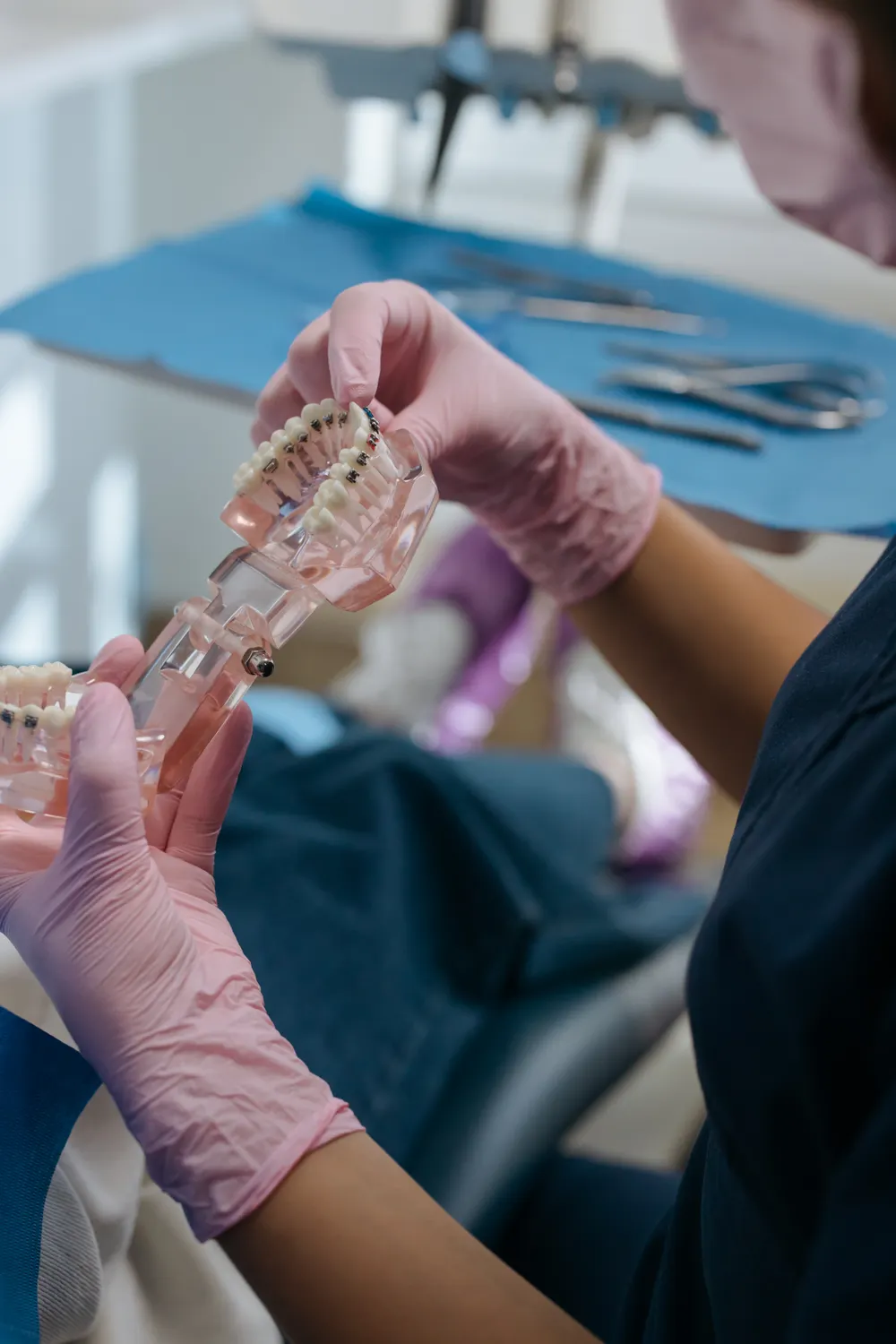
Dental model with metal braces and orthodontic instruments

Clear aligners

Clear aligners are a series of removable trays that move teeth without brackets or wires. They suit mild to moderate cases and patients who want a discreet option and can commit to daily wear.

Wear
18 to 22 hours a day
Check-ins
Every 4 to 8 weeks
Food
No restrictions
Planned by
Dr. Restrepo, in-house
What it is

Each set of clear thermoplastic trays is shaped slightly differently from the last. You wear each set for the time your doctor prescribes, and each step moves your teeth a small, planned amount.

Dr. Restrepo plans every aligner case in-house from your digital scan and checks your progress in person. Aligners work well for mild to moderate crowding and spacing, shorter plans, retreatment after past orthodontics, and patients who want no metal. Complex bite movements, big rotations, and deep bites are often better with braces, and the consultation is where that call is made.

Benefits
  • The trays are clear and hard to notice in conversation and in photos, which is what most adult patients care about first.
  • You take them out to eat, so there are no food restrictions, and you brush and floss the way you always have.
  • The plastic is smooth, so there is none of the cheek irritation that brackets and wires can cause in the first weeks of braces.
What to expect

Your free consultation checks whether aligners fit your bite and your routine, because they only work if they stay in. If you move forward, we take a digital scan, no impression material, and you review your projected plan before anything is made.

You'll get your first sets with instructions: wear them 18 to 22 hours a day, take them out only to eat, drink anything but water, and clean them, and switch on schedule. Teeth usually feel sore for a day or two with each new set. That pressure is the tray working.

At each check-in your doctor looks at how the trays seat. A tray that sits fully, with no gap at the edge of the tooth, is on track. A visible gap means that tooth is behind, so it needs more time or a small adjustment.

If teeth need extra guidance, a refinement set may be made, and your written plan explains how it's covered. You receive exact costs in writing before treatment starts.

Good to know
  • Aligners only work if you wear them. Inconsistent wear stalls progress or lets teeth drift, which extends treatment.
  • Trays can be lost or cracked. Replacements cost time and money, so a case for storage is worth the habit.
  • Most cases use attachments: small composite bumps bonded to a few teeth so the trays can grip. You'll feel them for a couple of days, then most patients stop noticing. They come off when treatment ends.

Risks of not treating it

Leaving a bite problem alone rarely freezes it in place. A case that aligners could handle today can grow into one that needs braces, or a longer plan, a few years from now.

Questions, answered

How many hours a day do I have to wear them?

Usually 18 to 22 hours. Take them out only to eat, drink anything but water, and brush. Progress depends directly on wear time.

Can I eat with aligners in?

No. Always remove them to eat or drink anything but plain water, then brush before putting them back in. Eating with trays in can stain and crack them.

What happens if I lose or crack a tray?

Call or text the office and go back to your previous set in the meantime. Do not skip ahead to the next tray without guidance, because a tray that does not fit can move teeth the wrong way.

If several trays are missing, we check how your teeth are tracking. If they're still on track, we can usually order replacement trays. If they've drifted, we bring you in for a refinement instead.

What if an attachment falls off?

It happens, and it is rarely urgent. Attachments give the trays their grip for specific movements, so one or two missing usually changes little, and it can wait until your next visit. Keep wearing your trays on schedule in the meantime.

If several attachments come off in the same area or arch, call or text us. An earlier visit may be needed to rebond them before those teeth fall behind the plan.

What is a refinement?

A refinement is an additional set of trays made partway through treatment, or near the end, when some teeth need more movement than the original plan achieved. We take a new scan, the lab makes the extra trays, and you keep going until your teeth reach the planned result. Refinements are a normal part of aligner treatment, not a sign that anything went wrong. Your written plan explains how refinements are covered.

Dental term: attachment. A small bump of composite bonded to a tooth that gives the aligner tray something to grip, helping guide difficult movements.

Questions about aligners? Call or text Dr. Restrepo directly at (562) 955-7677.

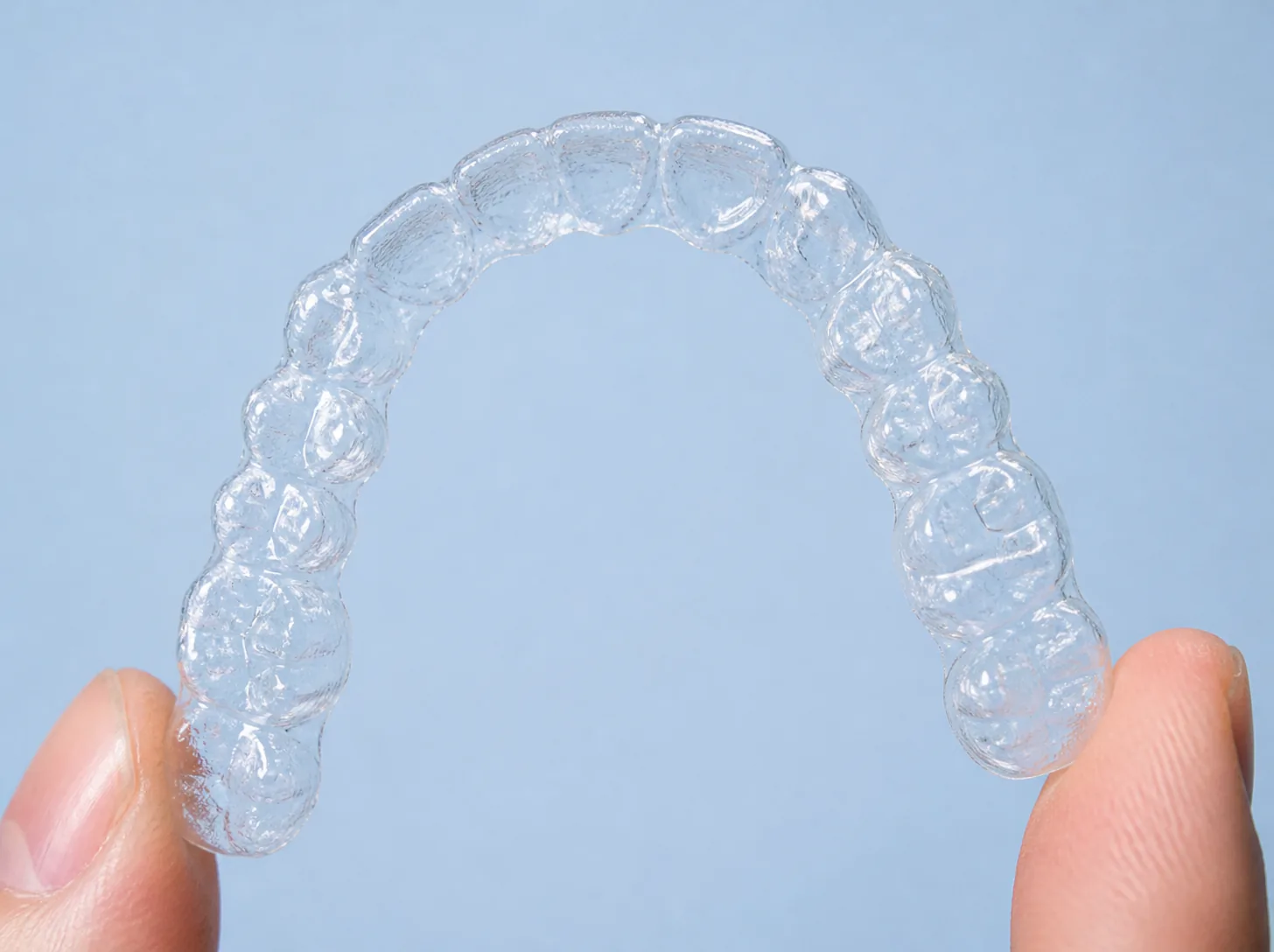
Clear aligner tray held between two fingers, with attachment bumps on several teeth

Retainers

Braces and aligners move teeth, and a retainer is what keeps them where treatment put them. If your teeth have started shifting after past treatment, call or text the office.

If a removable retainer breaks, cracks, or goes missing, call the office right away. Teeth start moving sooner than most people expect, and the longer you wait, the more likely a replacement alone will not be enough.

Daily
First 8 to 12 months
Then
At night, for life
Replace
About once a year
Made from
Your final scan
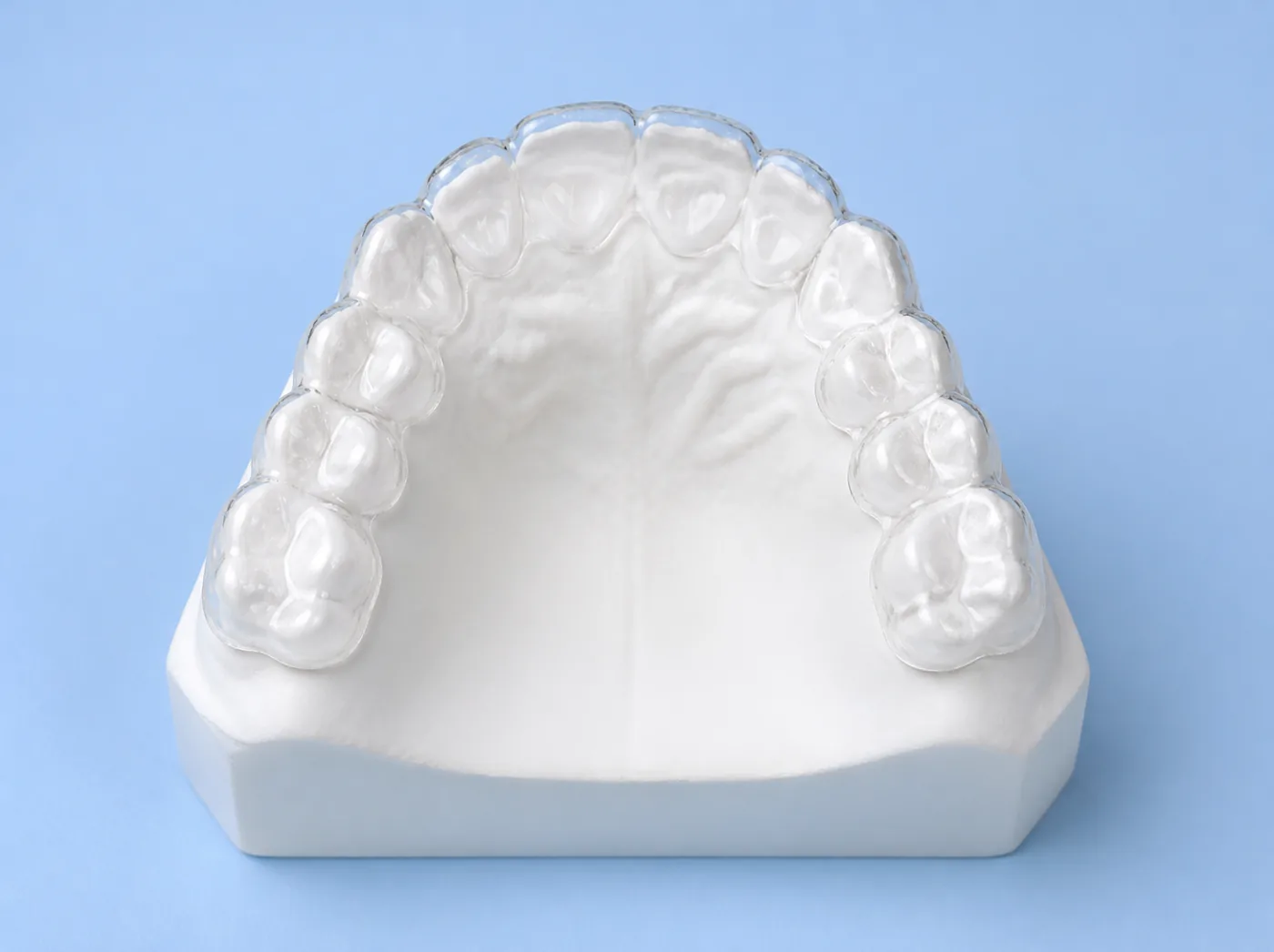
Clear Essix retainer on a model of the upper teeth
What it is

After orthodontic treatment, the bone and ligaments around the teeth need time to stabilize in their new positions, and teeth have a lifelong tendency to drift. A retainer is a custom device that holds your bite in its finished position while that stabilization happens, and then keeps it there with ongoing wear.

This office mainly makes clear retainers from a thicker thermoformed plastic, fitted to a scan of your finished teeth. If you prefer a Hawley retainer, the traditional kind with a wire across the front teeth, we can have the lab make one for you.

Benefits
  • A retainer prevents relapse, and relapse is the most common reason smiles change after orthodontic treatment. Without something holding them, teeth drift back.
  • Clear retainers fit normal life. They're easy to clean, and wearing one quickly becomes routine.
  • Bringing your retainer to checkups lets your doctor confirm the fit and catch small shifts while they are still quick and inexpensive to correct.
What to expect

Your retainer is made from a scan of your finished bite. Wear it daily for about the first 8 to 12 months, out only to eat and brush, while the bone and ligaments settle.

Then switch to nights. After a couple of months of nightly wear, every night or every other night is up to you. Teeth never fully stop trying to drift, so retainers are for life. Bring yours to checkups so the fit can be confirmed.

Good to know
  • Removable retainers can be lost, cracked, or chewed by pets. A storage case and a consistent spot at home prevent most losses.
  • Your written plan lists the retainers that come with your treatment, and we recommend a second set.
  • Alternating two sets makes each one last longer, and the spare is your backup: if one cracks or is lost, you wear the other while the replacement is made, so your teeth never go unprotected.

Risks of not wearing it

Teeth that have started shifting can often be guided back if we see them early. Wait too long and the retainer stops fitting, and once it doesn't fit, no retainer can pull the teeth back. Severe relapse means starting treatment again, so wearing your retainer protects the time and money you put in.

Questions, answered

How long do I have to wear my retainer?

Daily for about the first 8 to 12 months, while the bone and ligaments settle around your teeth in their new positions. Then nightly, and after a couple of months of that, nightly or every other night at your discretion. Retainers are a lifetime habit if you want the result to last.

Which retainer will I get?

Most patients get a clear retainer made from thicker thermoformed plastic, fitted to a scan of the finished teeth. If you prefer a Hawley retainer, we can order one from the lab. Your doctor recommends the type that fits your case.

What should I do if my retainer breaks or I lose it?

Call the office right away. Do not wait to see whether your teeth move, because by the time shifting is visible, a simple replacement may no longer fit.

Do retainers wear out?

Yes. Clear retainers are plastic, and plastic slowly deforms and can crack, so plan on a replacement about once a year. Because we keep the 3D scan of your finished result, a replacement can be made from that same scan, so it fits the way the first one did.

Dental term: relapse. Teeth drifting back toward their pre-treatment positions. Retainers exist to prevent it.

Your bite, explained

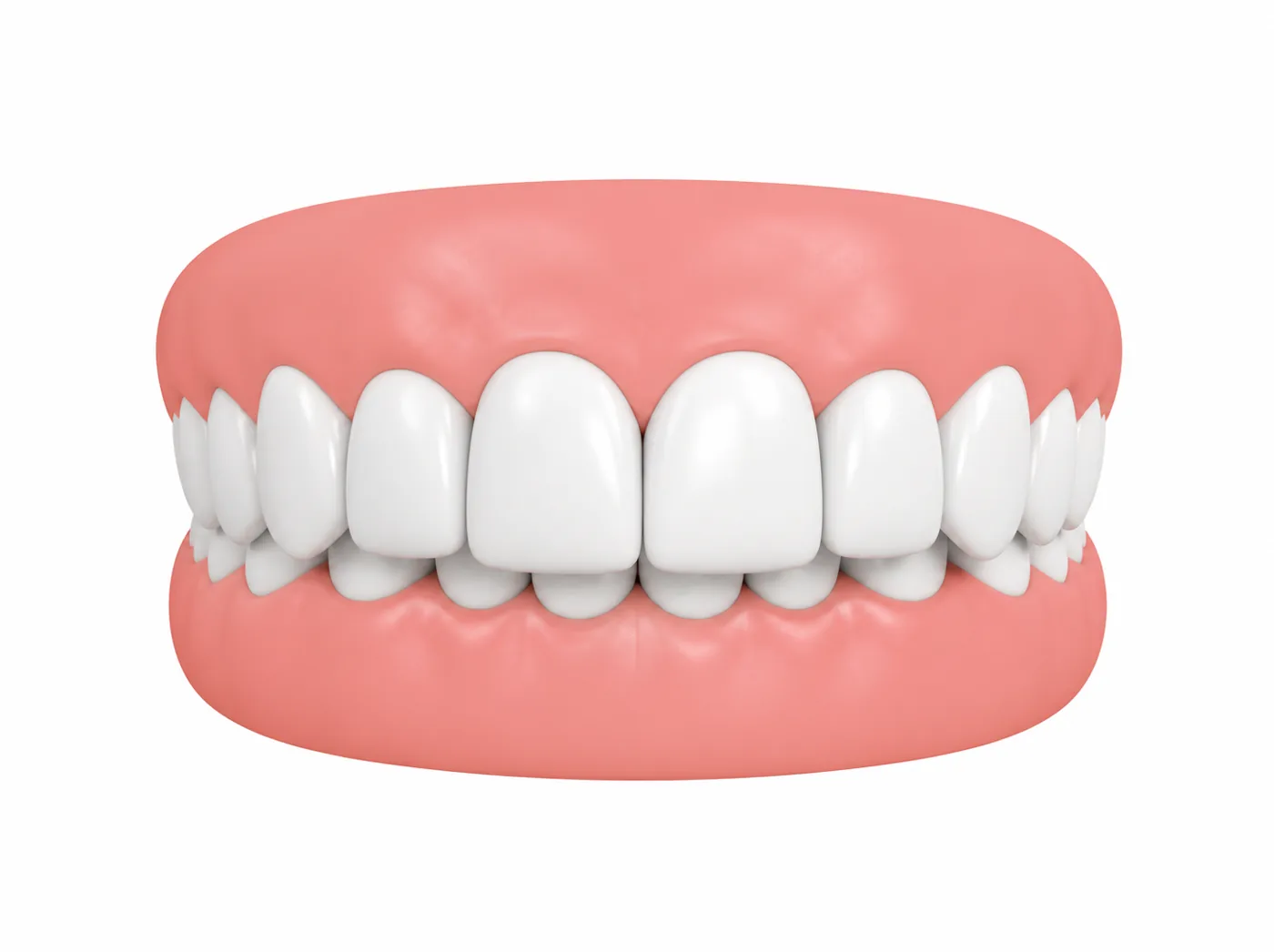
Your bite, or occlusion, is how the teeth of your maxilla (upper jaw) and mandible (lower jaw) come together. We look at it front to back, up and down, and side to side, and check that there's room for every tooth. Treatment aims for ideal occlusion.

Overjet
The horizontal overlap: how far the upper front teeth sit ahead of the lowers.
Overbite
The vertical overlap: how much the upper front teeth cover the lowers.
Healthy range
About 2 to 3 mm of each. Much more or much less points to one of the problems below.

Front to back: the three classes

Dentists classify the bite by how the upper and lower first molars meet, known as the Angle classification. The class describes the teeth. X-rays show whether the jaws themselves are part of it.

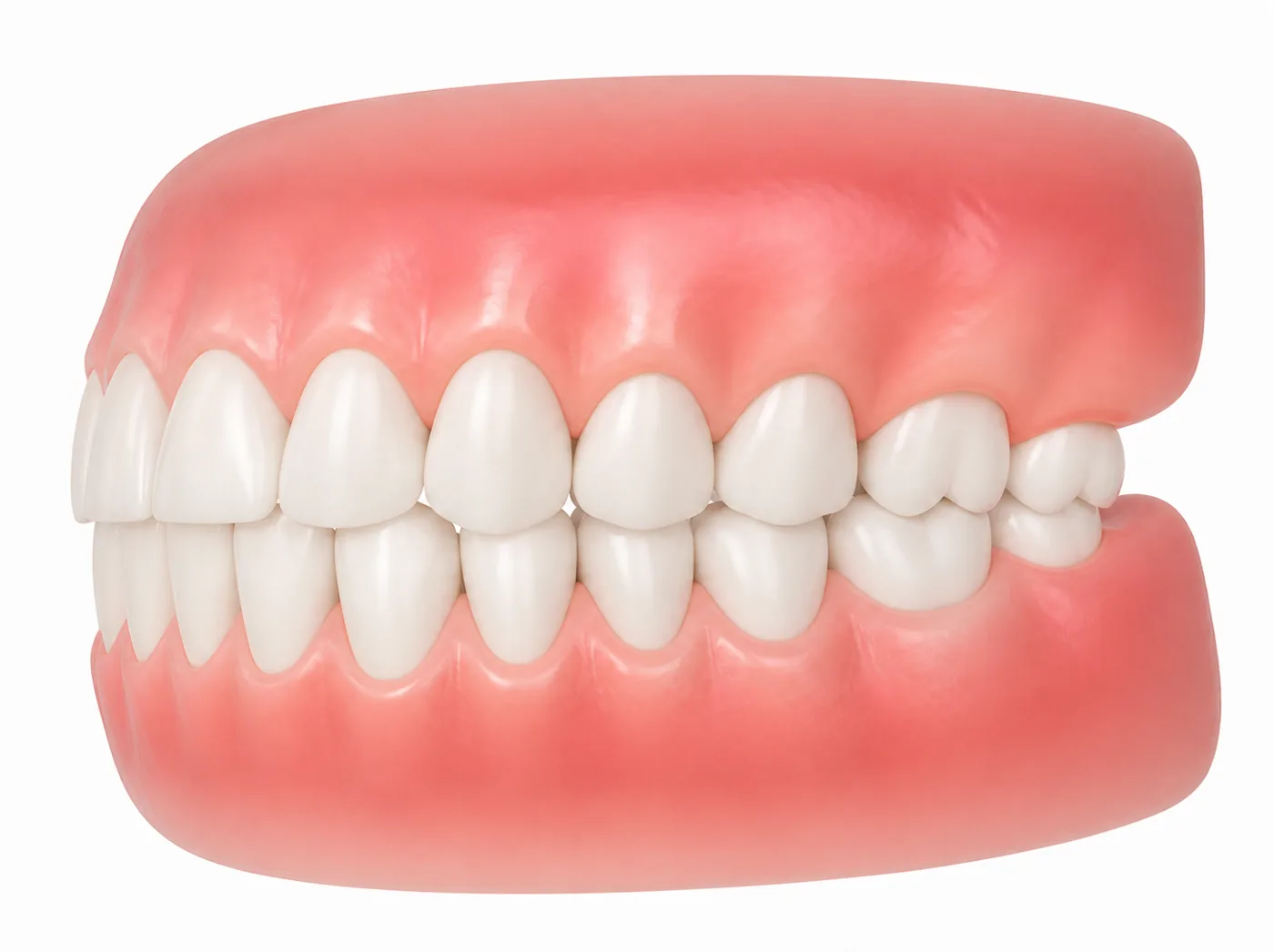
Illustration of a Class I bite, side view

Class I: ideal relationship

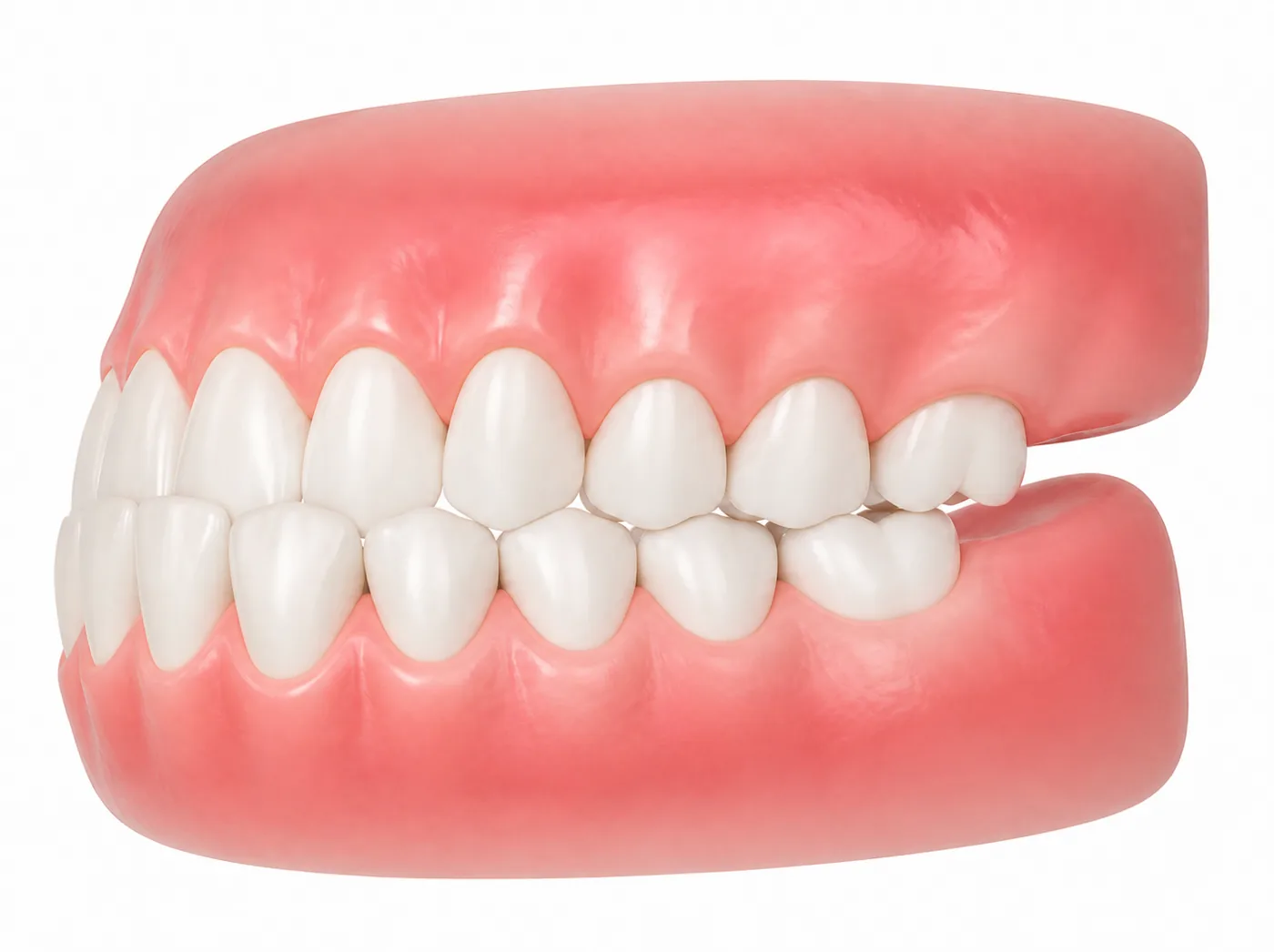
The maxillary (upper) and mandibular (lower) teeth meet in an ideal front-to-back relationship: the molars interlock, and the upper front teeth sit just ahead of the lowers. Crowding, spacing, or a vertical problem can still be present.

Illustration of a Class II Division 1 bite, side view, upper front teeth flared ahead of the lowers

Class II, Division 1

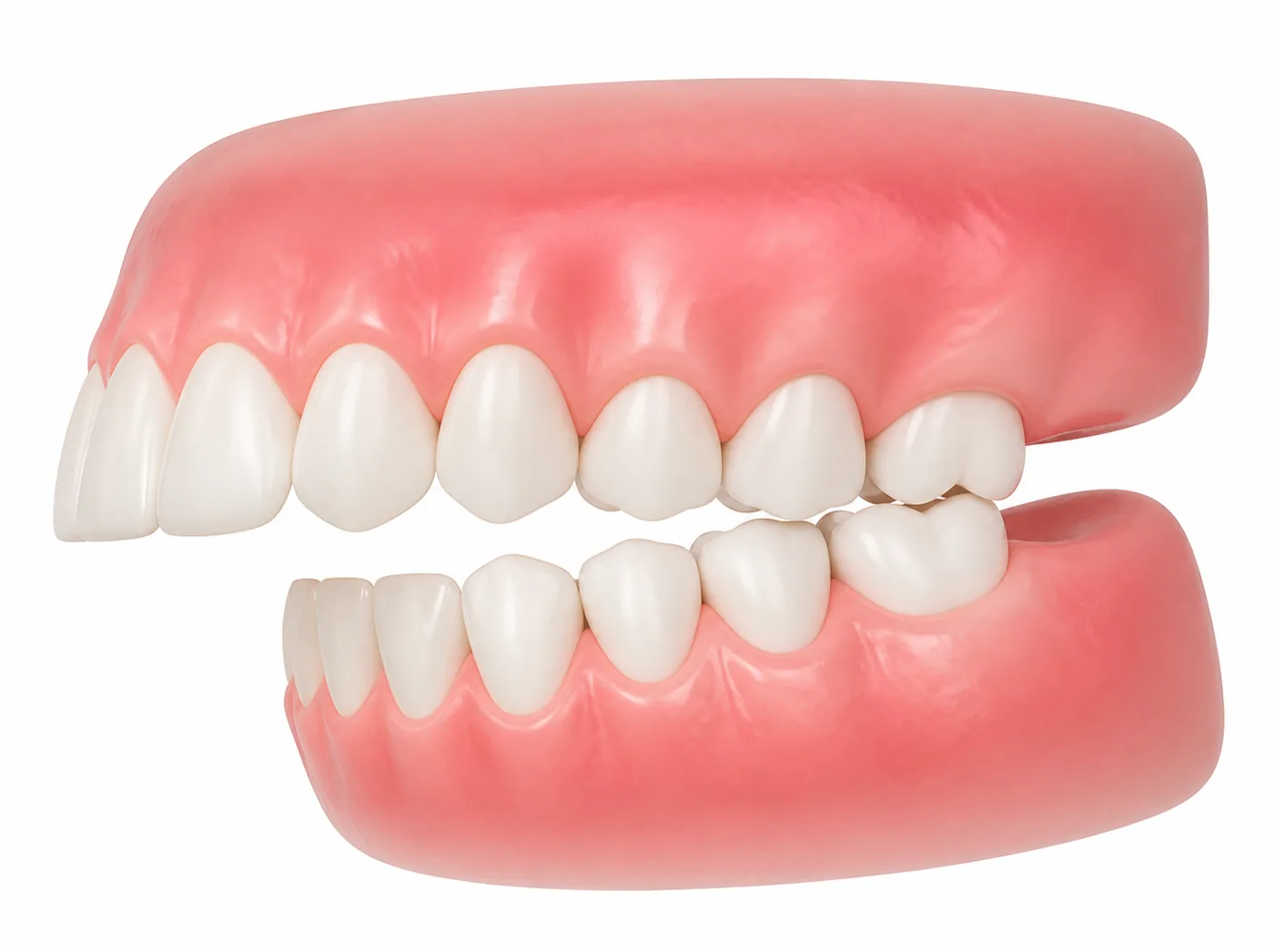
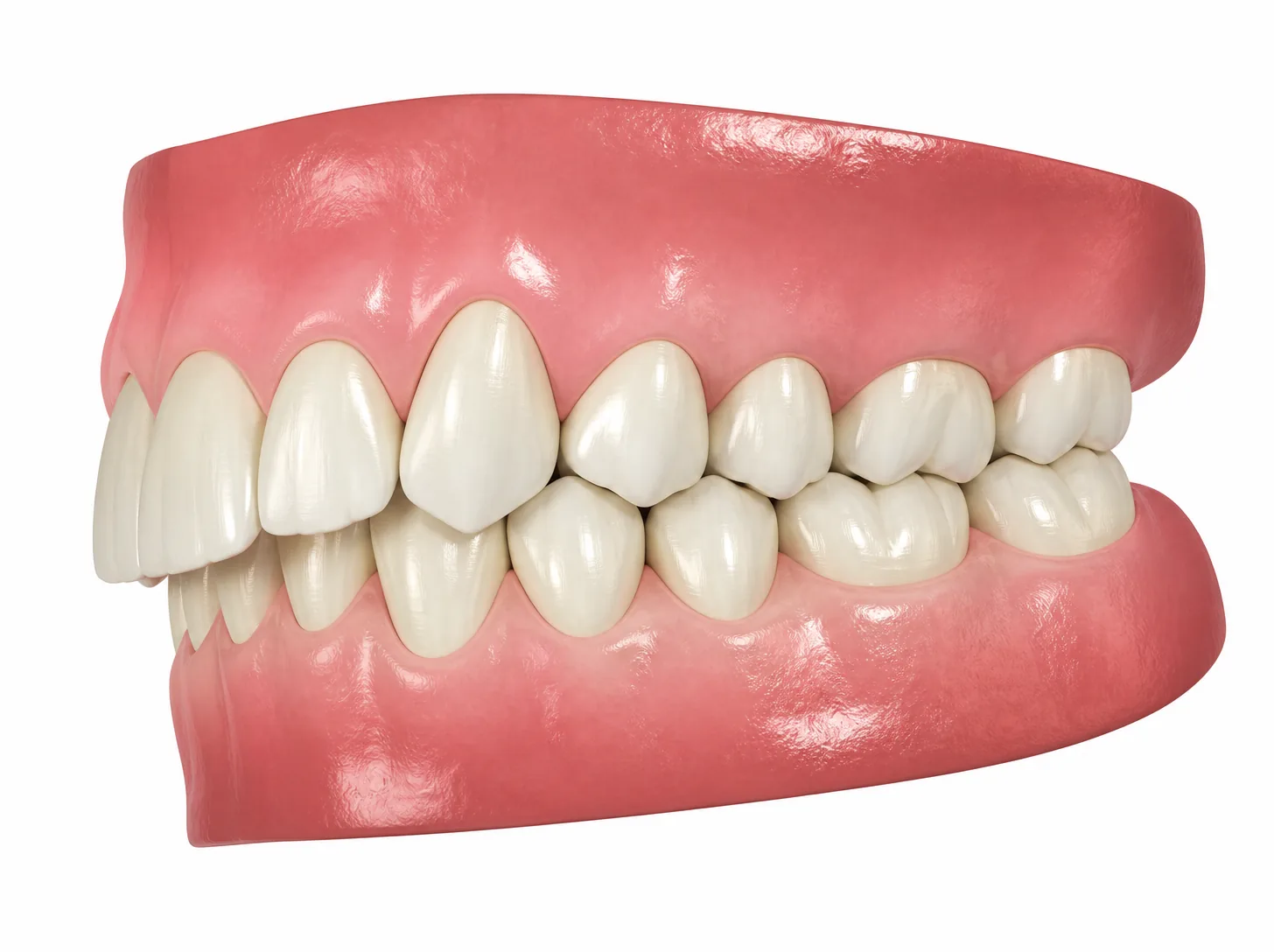
The mandibular teeth (lower jaw) sit further back in relation to the maxillary teeth (upper jaw), and the upper front teeth flare forward with a large overjet. They chip and get injured more easily.

Illustration of a Class II Division 2 bite, side view, upper front teeth tipped back over the lowers

Class II, Division 2

The mandibular teeth also sit further back, but the upper central incisors tip back and cover the lowers deeply. This deep overbite can wear the lower teeth or press into the gums.

Illustration of a Class III bite, side view, lower front teeth ahead of the uppers

Class III: lower teeth further forward

The mandibular teeth sit further forward in relation to the maxillary teeth. Often the lower front teeth close in front of the uppers, an anterior crossbite, commonly called an underbite.

It can cause uneven wear, chipping, and gum recession on the lower front teeth. The mandible can keep growing forward into the late teens, so early checks matter.

Try it: slide the lower teeth

Watch the molars and the front teeth as the lower teeth move back and forward.

Up and down: vertical problems

Illustration of an open bite

Open bite

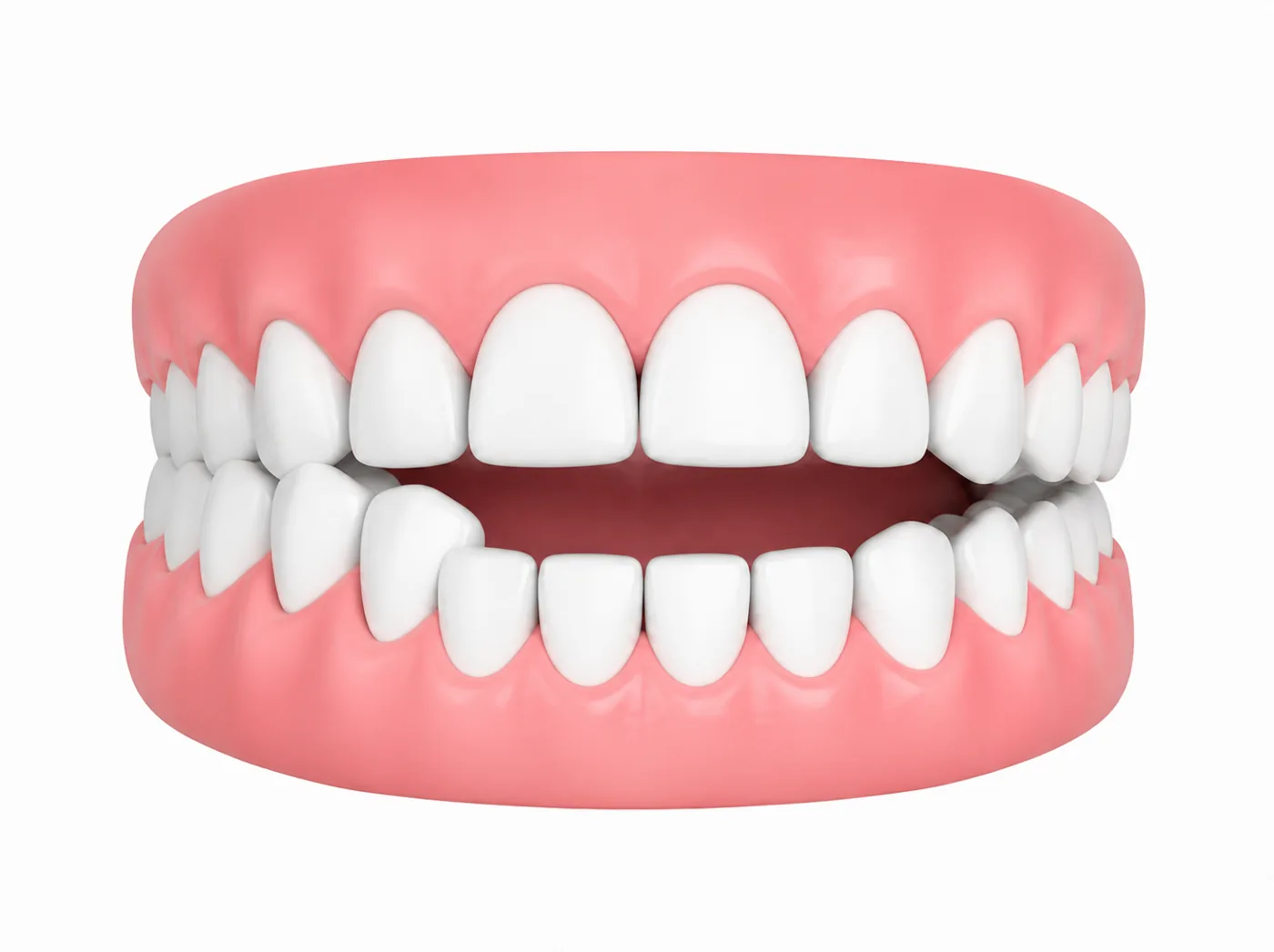
The front teeth don't overlap when the back teeth close, so biting into food is hard. It's often linked to thumb sucking or tongue position.

Illustration of a deep bite

Deep bite

Too much overbite: the upper front teeth cover most of the lowers. The lower teeth can wear down or bite into the gum behind the upper teeth.

Room for the teeth: space problems

Illustration of crowded teeth

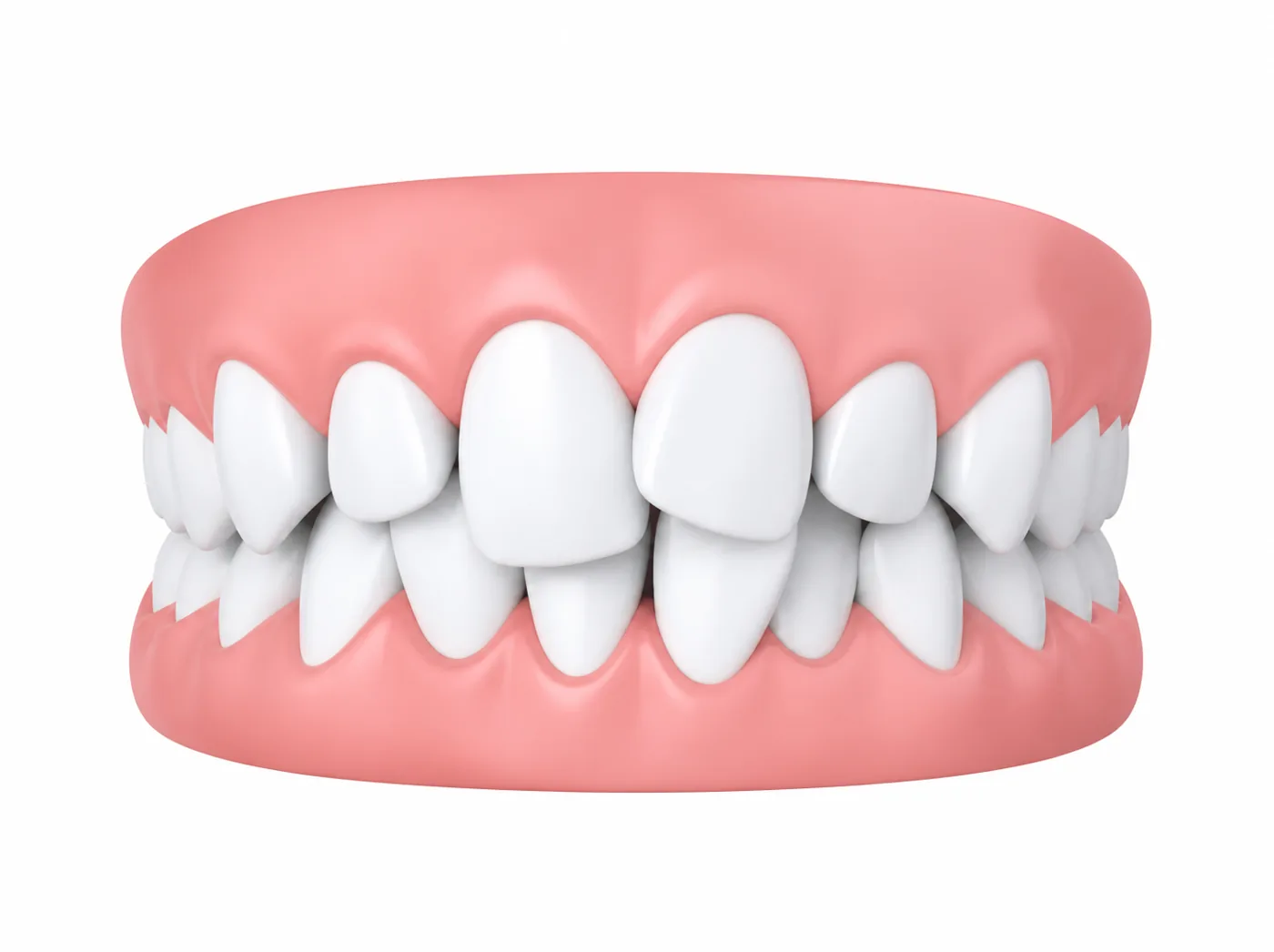
Crowding

There isn't enough room in the arch, so teeth overlap and rotate. Crowded teeth are harder to keep clean.

Illustration of spaces between teeth

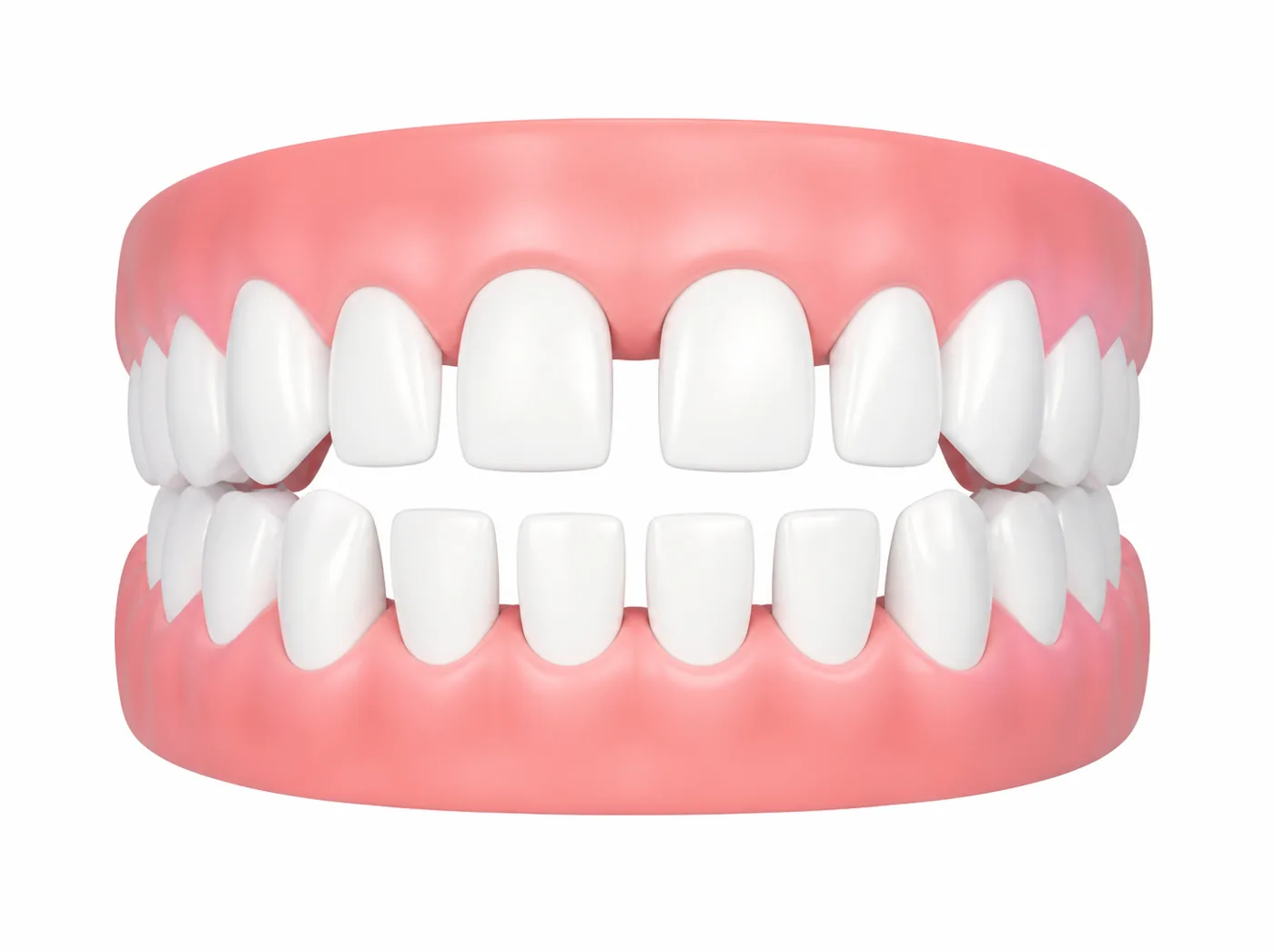
Spacing

Gaps between teeth (diastemas), from small or missing teeth or habits. Food packs into the spaces, and neighboring teeth can drift.

Side to side: transverse problems

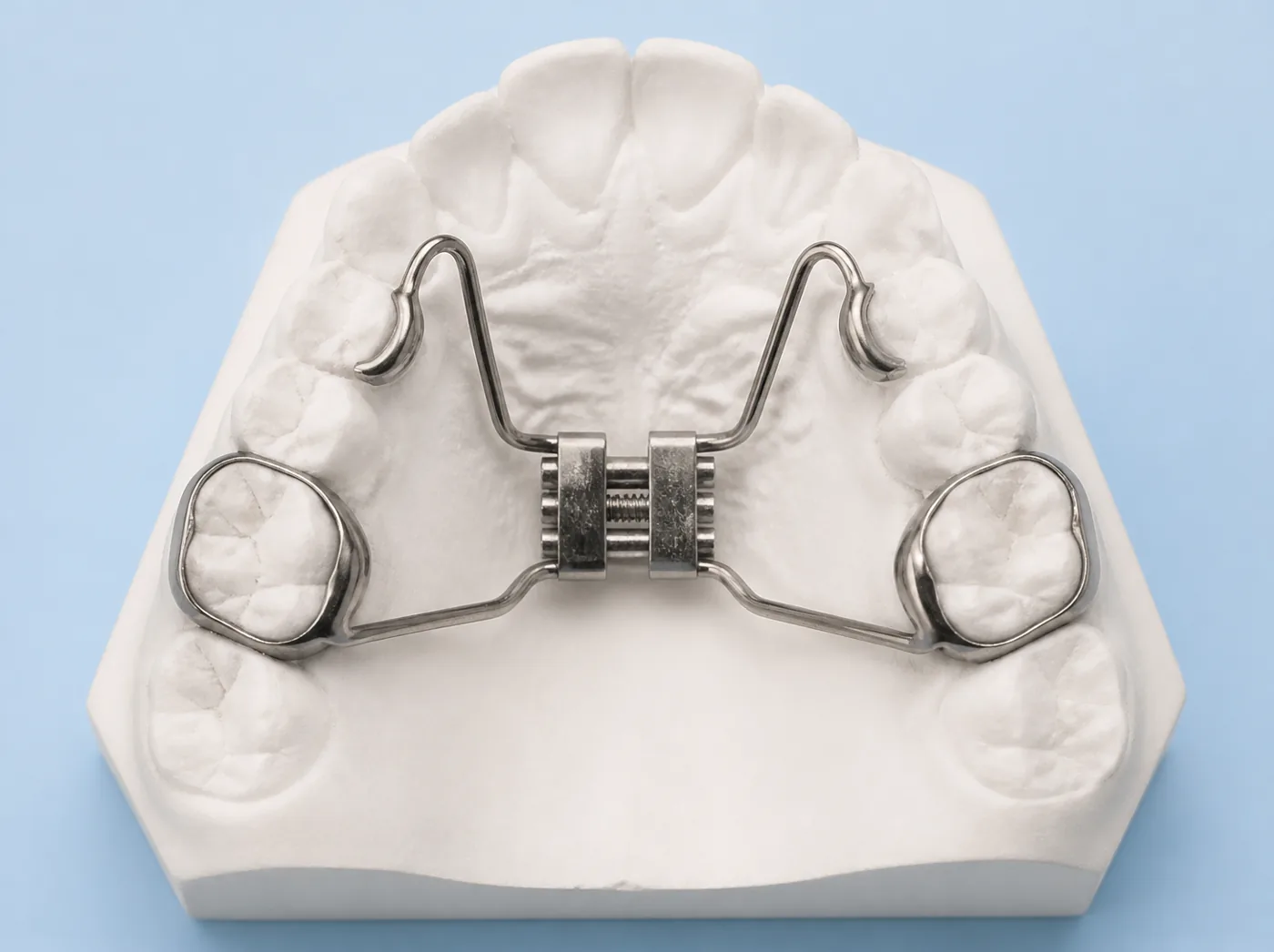
Palatal expander with a center screw, fixed to the upper molars of a dental model

A narrow maxilla and the palatal expander

A narrow maxilla (upper jaw) can crowd the teeth and cause a posterior crossbite, where the upper back teeth close inside the lowers. Some children also slide the mandible to one side to bite down, called a functional shift.

In growing children, the two halves of the maxilla meet at a seam, the midpalatal suture, that hasn't fused yet. A palatal expander gently widens it.

The expander is fixed to the upper molars. A small center screw is turned on the schedule your doctor gives you, usually for a few weeks, and the expander stays in place for several months while new bone fills in.

Expansion works best in the mixed dentition, when baby and adult teeth are both present. That's one reason we like to see children around age six to seven.

Why we aim for ideal occlusion

When the teeth meet evenly, biting forces spread across many teeth instead of a few. That means less uneven wear and chipping, comfortable chewing, and a result that's easier to hold with retainers.

Digital planning

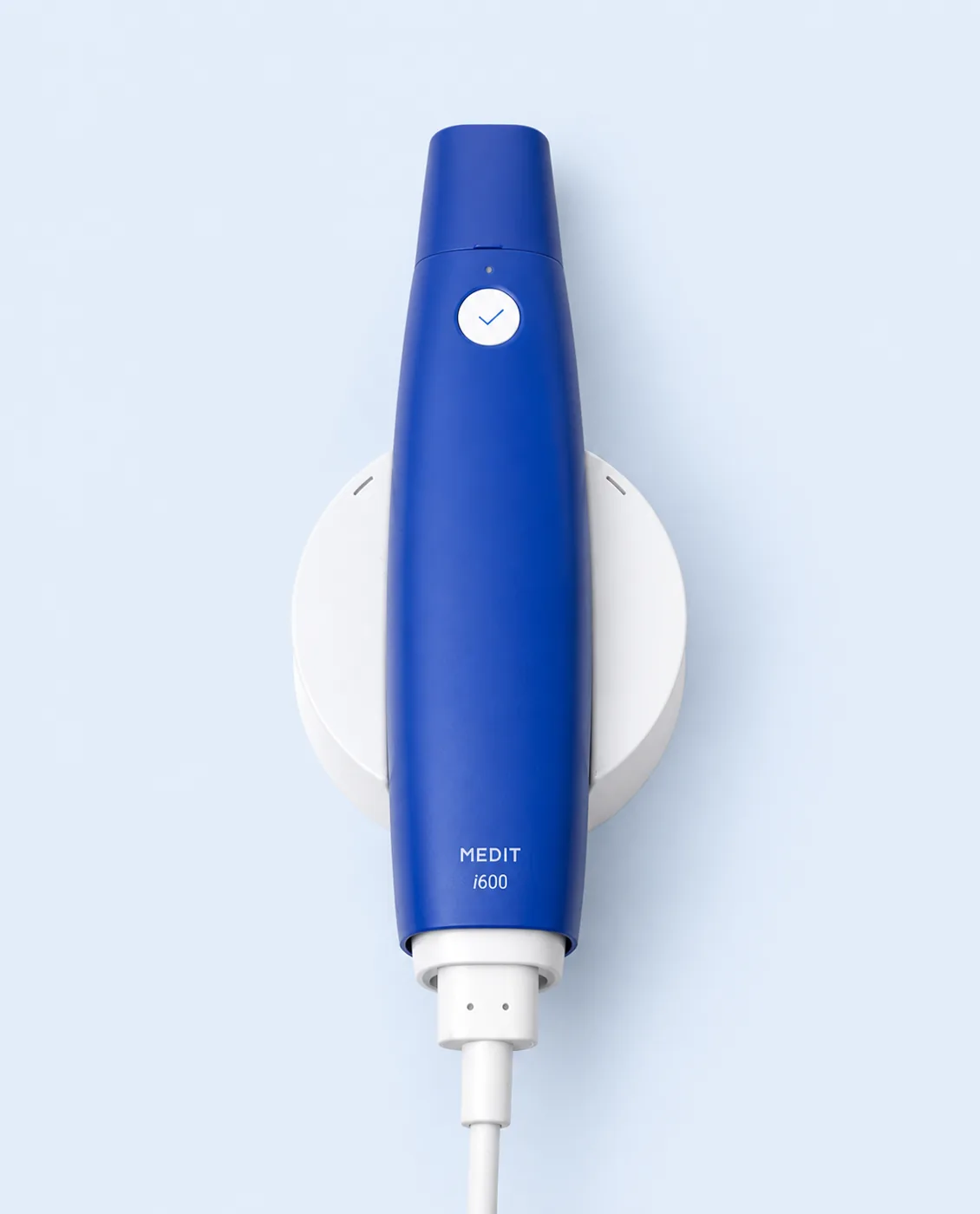
Treatment is planned from a complete set of images: a digital scan of the teeth, close-up X-rays of individual teeth, and wide views of the jaws and head. Those same images track tooth movement as treatment progresses.

The office's Medit i600 intraoral scanner in its cradle
Intraoral scansOur Medit 3D scanner captures the teeth digitally, so most patients never need a putty impression.
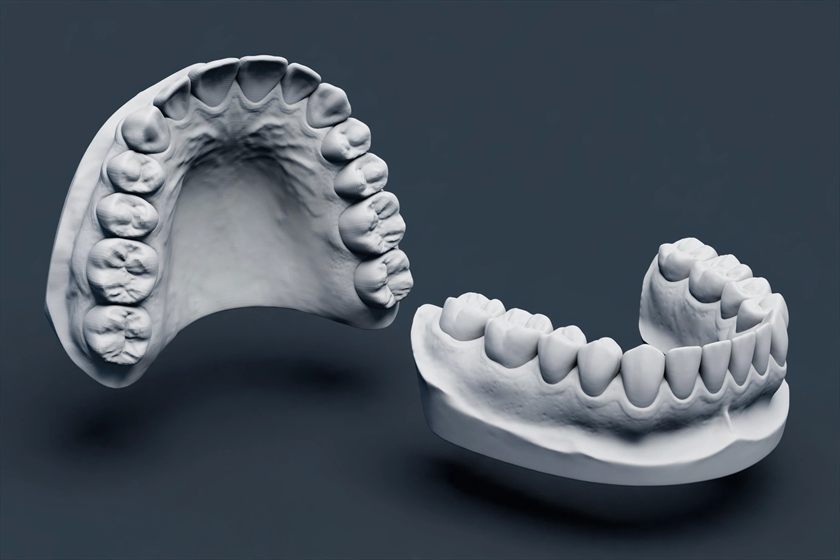
3D-printed models of the upper and lower teeth
3D-printed modelsPrinted from a digital scan, models of the upper and lower teeth are what retainers and lab work are made on.
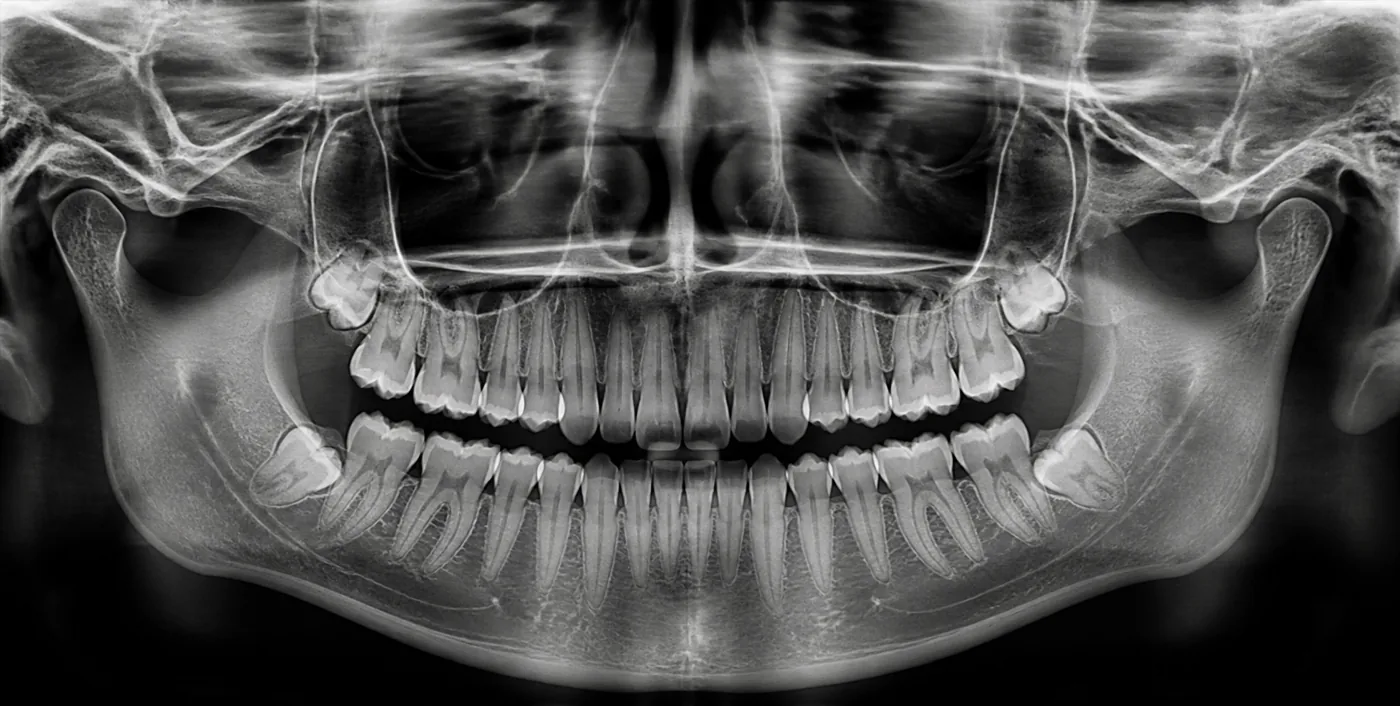
Panoramic X-ray showing all the teeth and jaws
Panoramic X-raysOne image shows every tooth, including the wisdom teeth, which helps your doctor spot impacted teeth before they cause trouble.
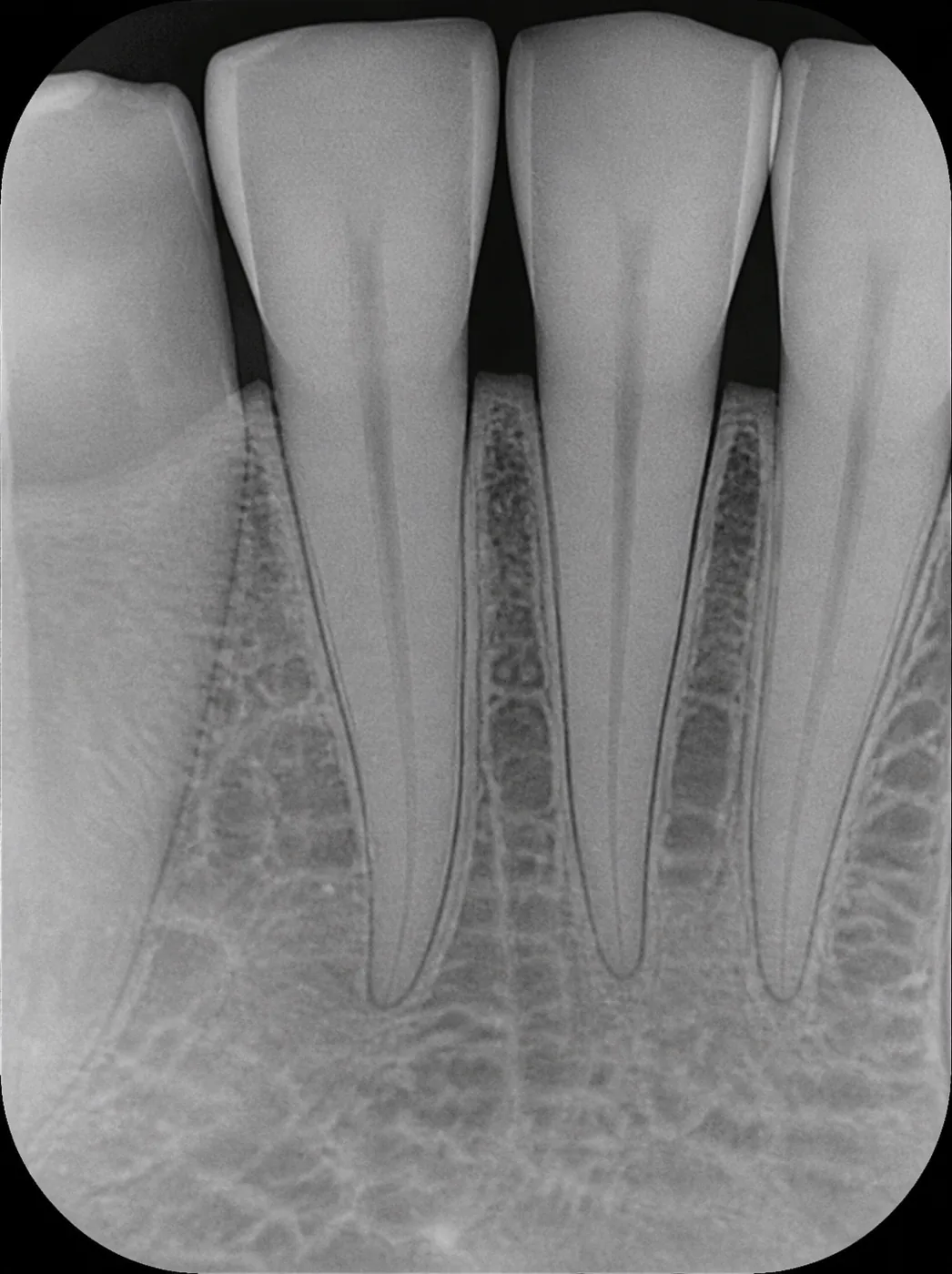
Periapical X-ray of the lower front teeth, from crown to root tip
Periapical X-raysA close-up X-ray of a few teeth, from the crowns down to the root tips. It's used to check for infection, decay, and problems at the roots.
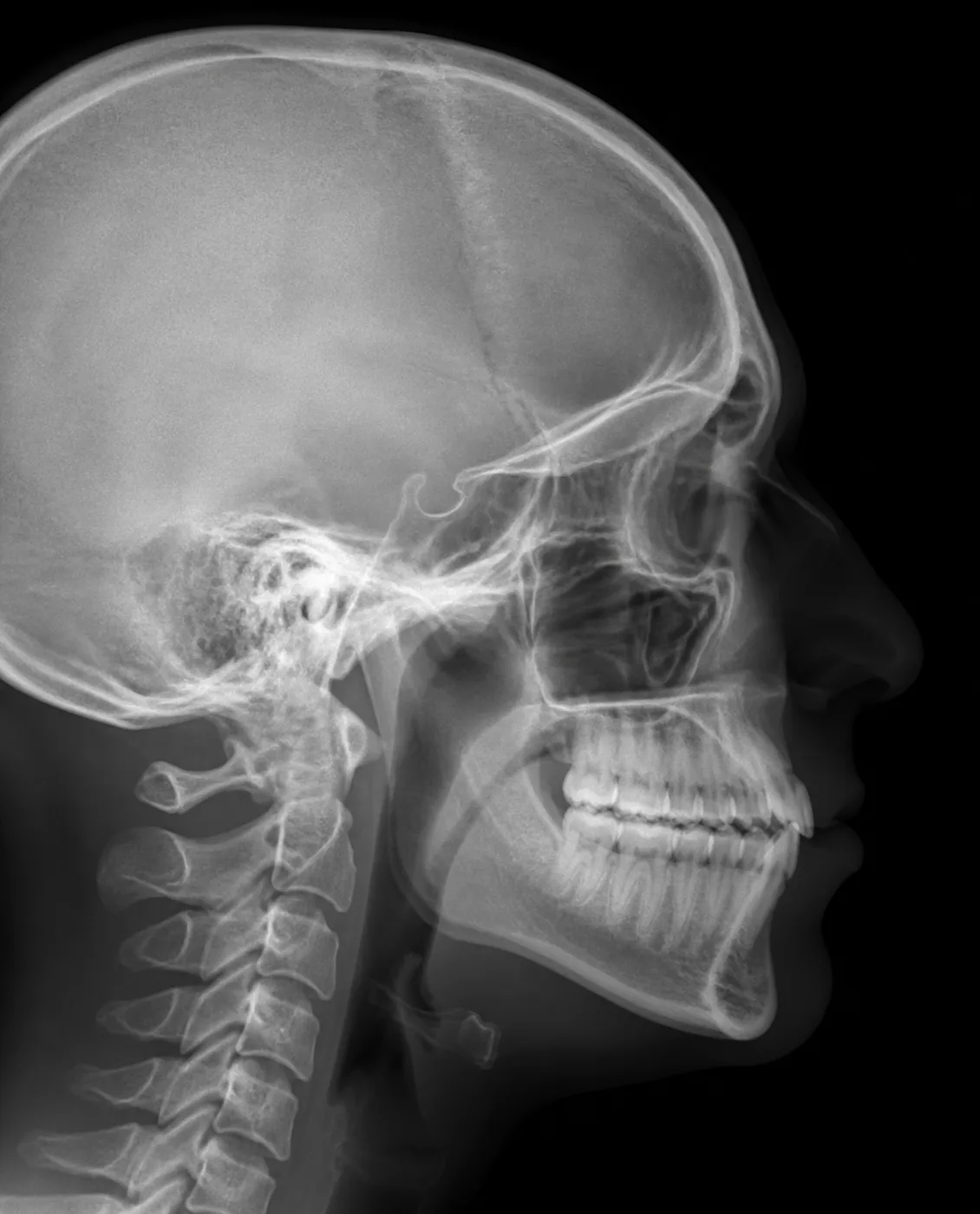
Lateral cephalometric X-ray, a side view of the head, teeth, and jaws
Lateral cephalometric X-rayA side view of the head, teeth, and jaws. It shows how the maxilla, mandible, and teeth relate front to back, which guides orthodontic planning.
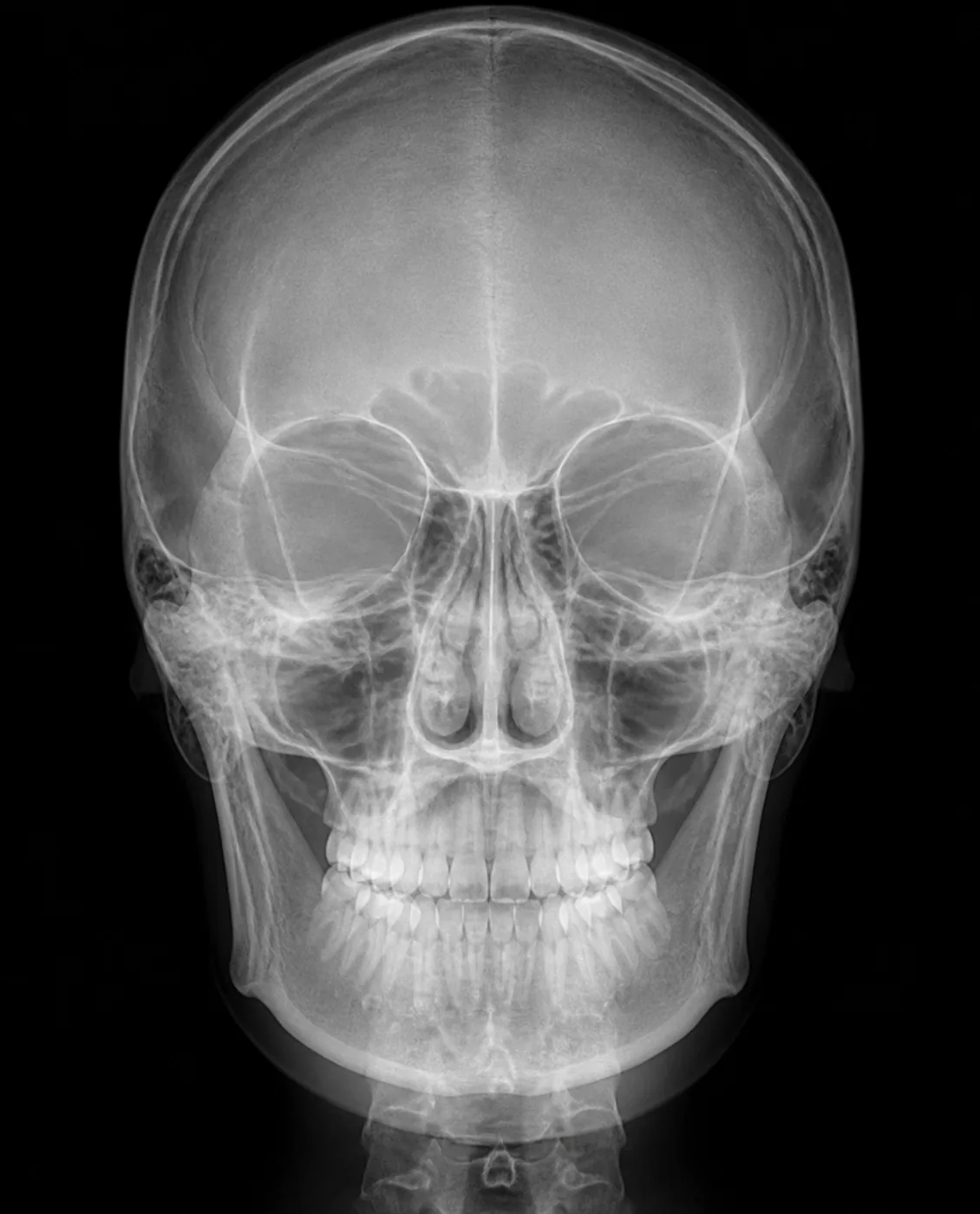
Frontal cephalometric X-ray, a front view of the head and jaws
Frontal cephalometric X-rayA front view of the head and jaws, used to check facial symmetry and how the maxilla and mandible line up side to side.

Which treatment fits your life?

Five quick questions about your bite and your daily routine. This quiz is a guide, not a diagnosis, and it sends nothing anywhere. Your answers stay in your browser.

Braces or clear aligners?

Both straighten teeth. The right choice depends on your bite and your daily routine. Here is how they compare, and what each one asks of you.

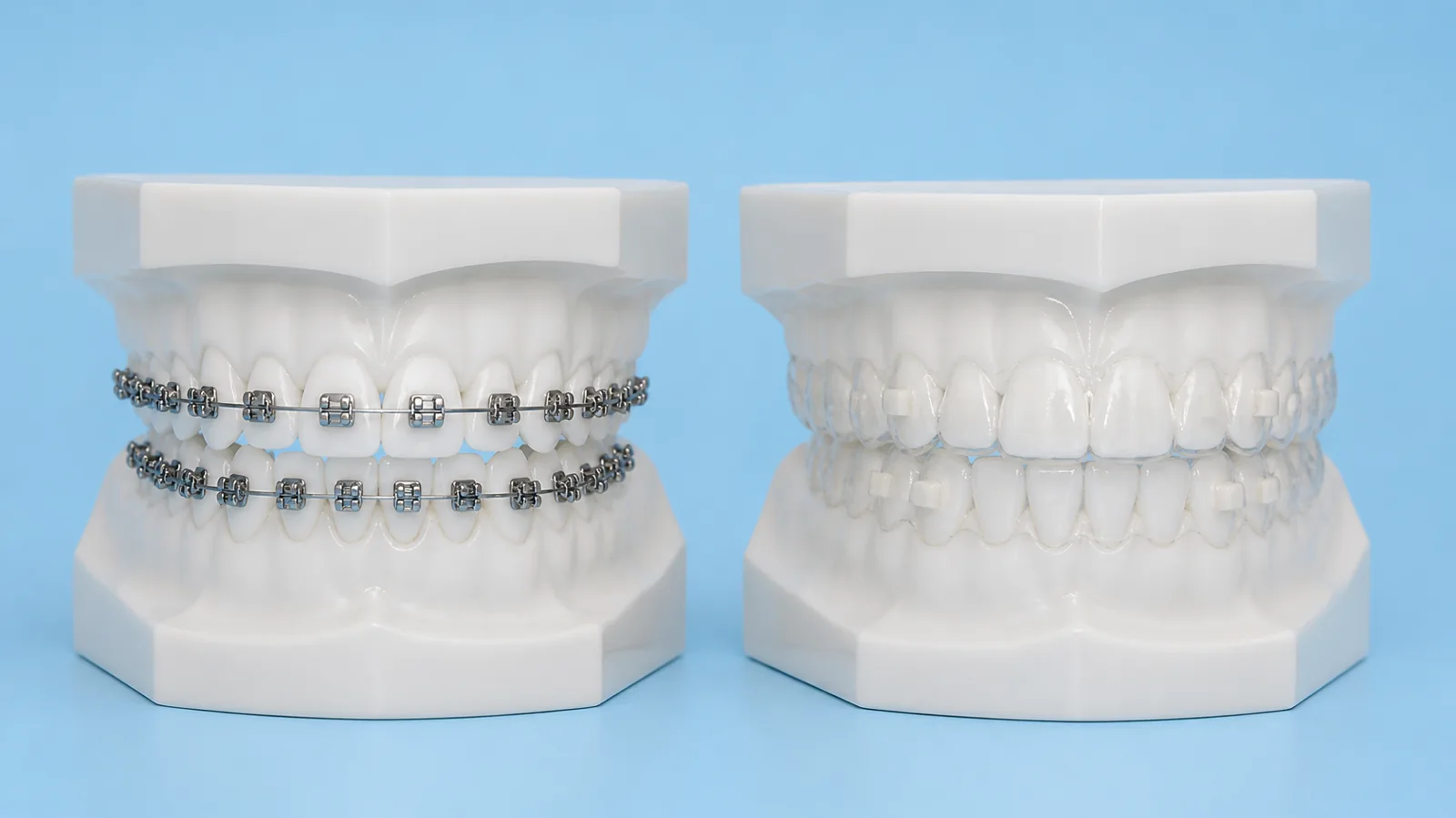
A model with metal braces beside a model wearing clear aligners with attachments
BracesClear aligners
AppearanceMetal or ceramic brackets visible on the teeth.Clear trays made from medical-grade thermoplastic, hard to notice.
ComfortBrackets and wires can rub the cheeks, especially at first. Some soreness after adjustments is normal.The plastic is smooth, but teeth can feel sore or pressured when switching to each new tray.
VisitsAbout every 4 weeks.Every 4 to 8 weeks, depending on the case.
Best forComplex bite problems, rotations, deep bites, and precise tooth control.Mild to moderate cases, shorter treatment plans when appropriate, orthodontic retreatment, and patients prioritizing aesthetics or avoiding metal.
Daily effortFixed braces work around the clock with nothing to remember.Aligners only work if you wear them 18 to 22 hours a day.
EatingAvoid hard, sticky, and chewy foods that can break brackets.Remove them to eat, so there are no food restrictions.

Braces are excellent tools, and so are aligners. The consultation is where your doctor matches the tool to your case.

Explore braces careExplore aligner care

Good to know before you call

Insurance

We accept certain PPO plans. Call or text us your plan, and we'll check your benefits before your visit.

Ortho emergencies

A poking wire, a broken bracket, or a cracked tray? Call or text us. If it can't wait until your next ortho visit, we'll try to set up an emergency appointment.

When to start

Children can be seen once baby and adult teeth are both present (the mixed dentition), around age six to seven. Treatment at this age, if needed, is called Phase 1. Teens and adults are welcome too.

Hablamos español

Our staff speaks Spanish. Call or text in whichever language you prefer.

General information only. This page describes dental treatment in general terms and is not dental advice for your specific situation. Only an in-person exam can determine what you need.

Book a free ortho consult

(562) 904-6930

Call or text the office at (562) 904-6930, or email [email protected]. Orthodontic consultations are free. Visits are by appointment on set office days each month.

In-office payment plans carry no interest charged by the office. Your exact fee and plan are set in writing at your consult.

Call(562) 904-6930Text(562) 904-6930