Insurance
We accept certain PPO plans. Call or text us your plan, and we'll check your benefits before your visit.

Everyday dental care, from checkups and cleanings to fillings, crowns, and simple extractions, explained in plain language before anything is done.
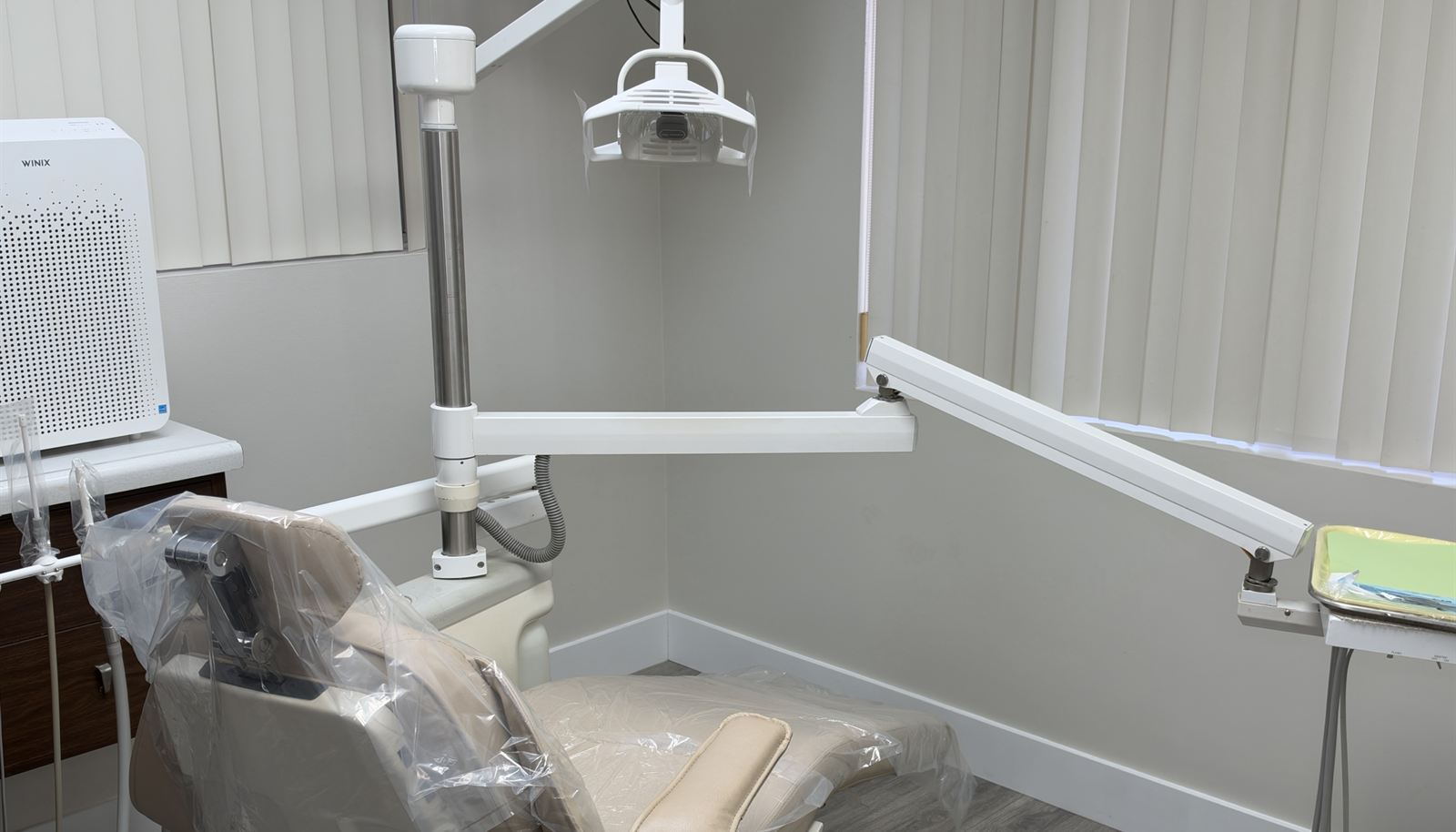
A dental exam is a full check of your teeth, gums, bite, and mouth. It is how small problems get caught while they are still small.
An exam works from the outside in. Outside the mouth, your doctor checks your head, neck, and face, feels along the jaw and neck for swelling, and checks how your jaw joints (TMJ) move and whether they click, pop, or ache.
Inside, your doctor checks every tooth for decay, cracks, and worn fillings, the gums for inflammation and pocketing, your bite (occlusion), and the tongue, cheeks, and the roof and floor of the mouth.
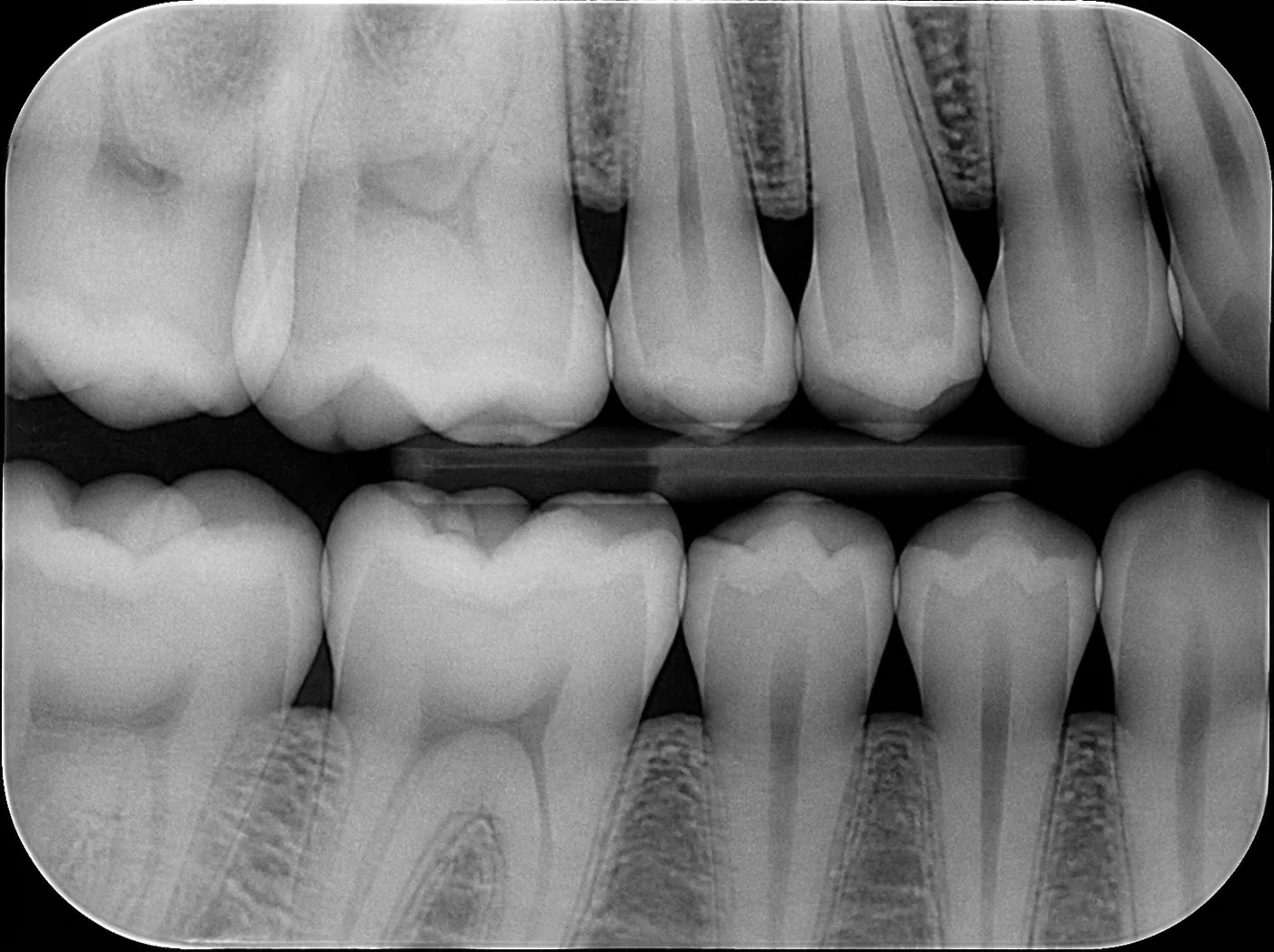
X-rays show what eyes can't: decay between teeth, infection at the root tips, and bone loss. If you don't have a current full set on file (a full mouth series, or FMX), we take one as part of a complete exam. After that, X-rays are updated when they're due, not at every visit.
A cavity the size of a pinhead and one deep enough to need a root canal can both feel like nothing. Caught early, the fix is small. Left alone, the cavity keeps growing until it hurts. Catching problems while they're small is the whole point of the exam.
The visit starts with your dental and medical history and any concerns you want checked. Your doctor gently probes along the gumline to measure pocket depth. It feels like light pressure, and inflamed gums may bleed a little, which is useful information too.
A suspect tooth may get a gentle tap (a percussion test) and a brief touch with a chilled cotton tip (a cold test). Sensitivity that fades quickly is normal. An ache that lingers can mean the nerve is inflamed. Your doctor reads these results together with the X-rays, never from one test alone.
After the exam you get a plain-language rundown of what was found and what, if anything, needs attention. No treatment happens without your say-so, and you receive exact costs in writing before deciding anything.
Usually every six months. Your doctor may recommend a different interval based on your risk: active gum disease, frequent decay, or ongoing treatment can call for more frequent checks.
No. X-rays are taken when they are due, based on your history, your symptoms, and the time since your last set. Digital X-rays use less radiation than film.
On healthy teeth and gums, the exam should not hurt. Probing feels like light pressure, and the tap and temperature tests cause only brief sensations.
A tooth or gum that is already compromised can react differently, with sharper or lingering sensitivity when it is tapped or chilled. That reaction does not mean the exam caused harm. It is information, and it helps your doctor judge how serious the problem is.
A professional cleaning removes the plaque and tartar your toothbrush can't reach. Along with daily brushing and flossing, it's your best defense against gum disease.
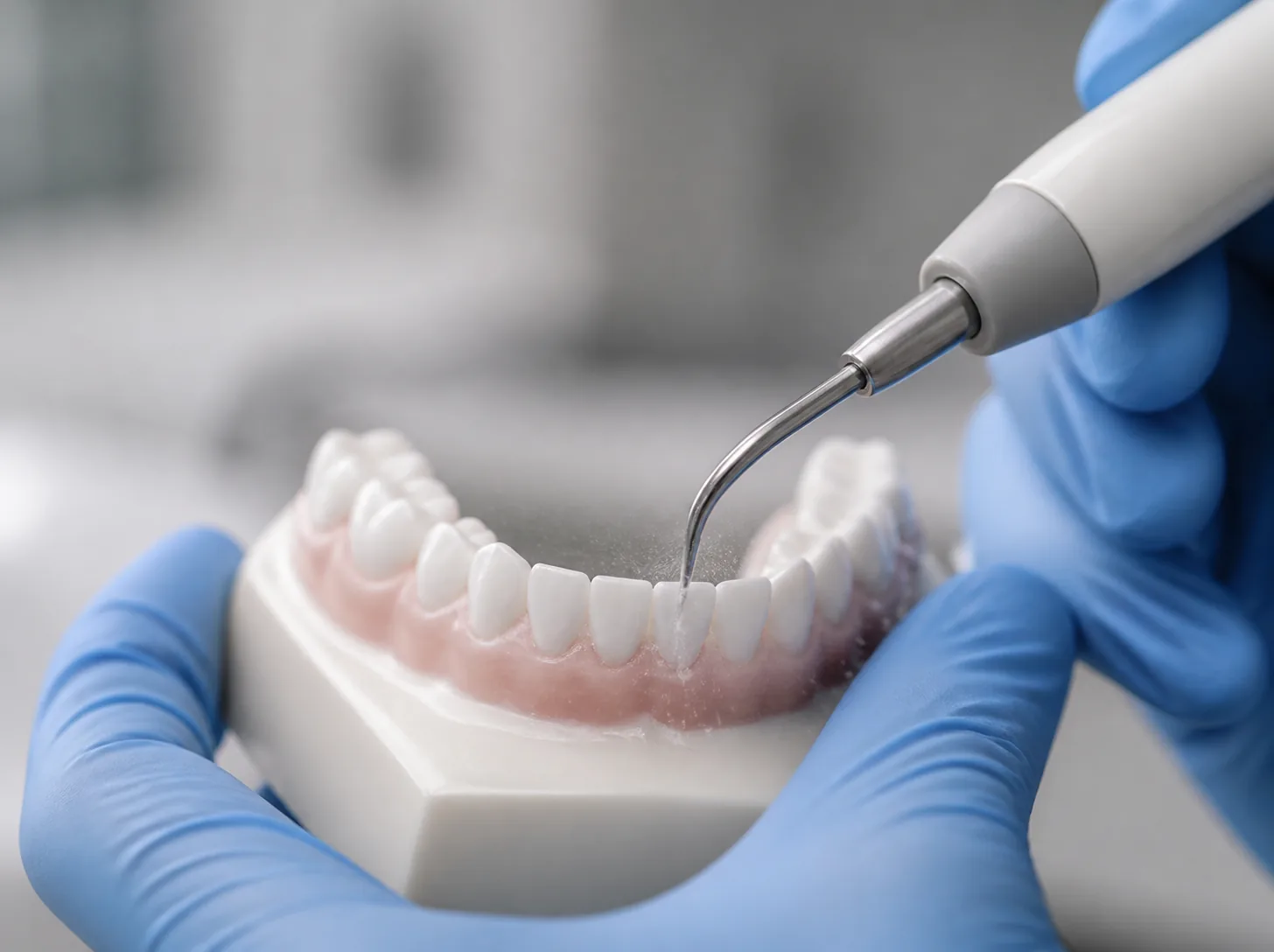
Plaque your brush misses hardens into tartar (calculus), and no toothbrush or floss can remove it. The hygienist or doctor scales it off above and below the gumline, polishes the teeth, and checks the gums. The heaviest buildup usually sits behind the lower front teeth, right where the salivary glands under your tongue release the minerals that harden plaque.
There are three kinds of cleaning:
A routine cleaning doesn't usually need numbing. The ultrasonic scaler comes first: it buzzes and sprays water, and it may tickle, but it shouldn't be sharp. Hand instruments follow, with some scraping and pressure. Polishing comes last, with a gritty paste on a soft rotating cup. The goal is smoothness more than shine, because plaque has less to cling to on a polished surface.
You'll hear numbers called out as your gum pockets are measured, in millimeters. Ones, twos, and threes are healthy. Fours and fives, especially where the gums bleed, are an early warning of gum disease. Gums may feel tender for a day or two afterward, especially after heavy buildup.
A regular cleaning removes tartar above the gumline and is preventive. A deep cleaning (scaling and root planing) goes below the gumline to clean root surfaces where gum disease has taken hold. It is done with numbing and sometimes split across visits.
A standard cleaning feels like vibration, scraping, and pressure, not sharp pain, but sensitivity is not spread evenly. The lower front teeth have thinner roots than the rest, so that area often feels the most during a cleaning. Inflamed gums are more tender as well, and a tooth with an underlying problem can react more than its neighbors. Some people are simply more sensitive than others, problem or no problem.
A deep cleaning is numbed, so you feel pressure but not pain during the visit.
For adults, preferably every six months. Younger patients with healthy mouths can often go longer between checkups, up to about twelve months, and your doctor sets the interval by the patient rather than the calendar alone.
If your gums need more attention, the schedule tightens: after gum disease treatment, periodontal maintenance visits, usually every three months, keep the gums stable.
Yes. A cleaning removes what has already hardened. Daily brushing and cleaning between the teeth prevent new plaque from hardening in the first place. The two work together.
A filling repairs a cavity: the decay comes out, and composite rebuilds what it ate away. Caught small, the repair stays small.
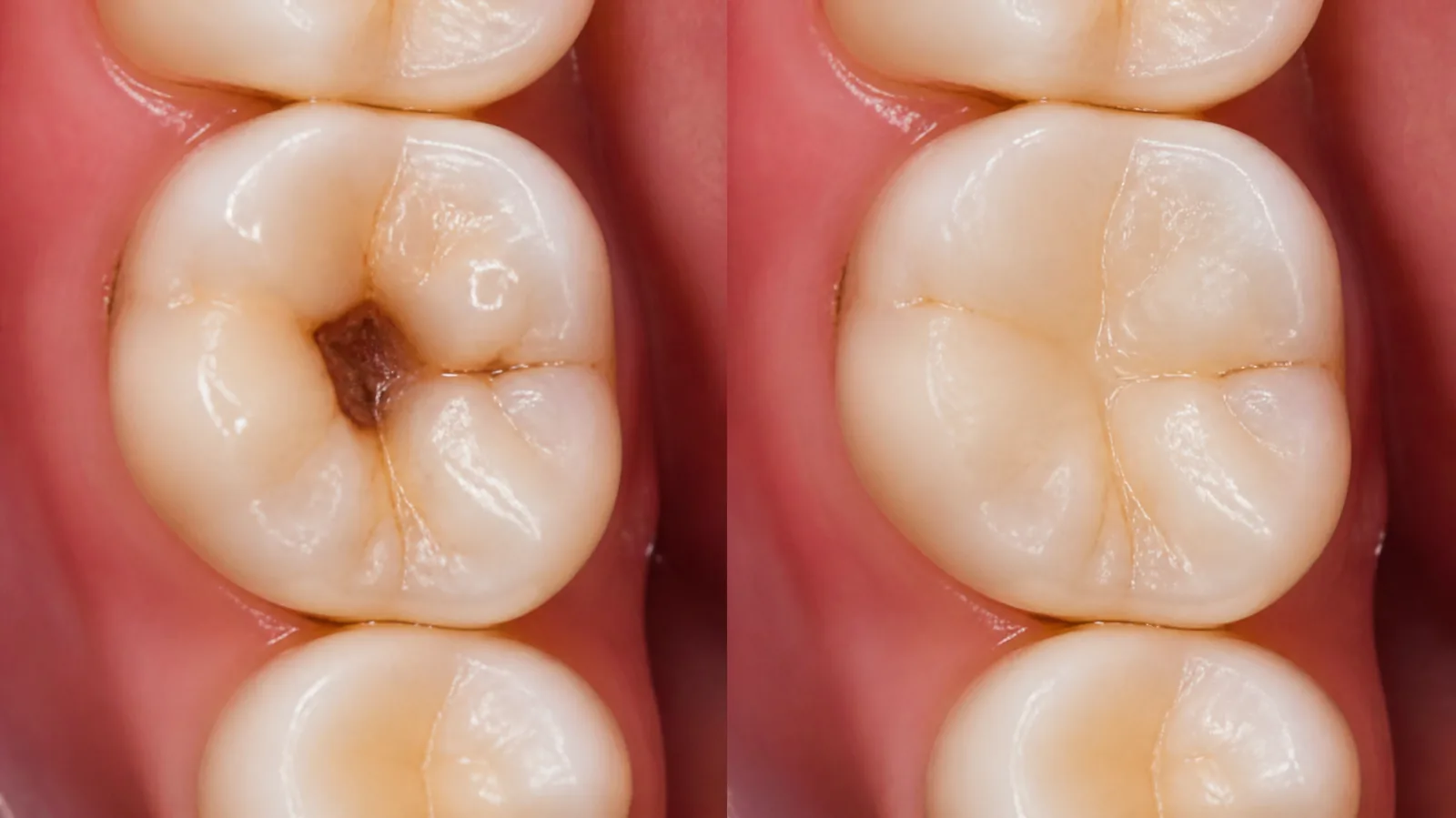
Healthy enamel and dentin are hard. Decay is a soft, bacteria-filled spot that keeps spreading under the surface, often long before anything hurts. All of it has to come out, or the cavity keeps growing under the repair.
Composite is a resin reinforced with fine glass particles. It's shaded to match your tooth, hardened in place with a curing light, and polished until it blends in. Fillings handle small to moderate cavities. When decay is very large, cracks the tooth, or reaches the nerve, your doctor will tell you honestly if you need a crown or root canal treatment instead. Root canals are referred to a specialist.
You'll feel a small pinch from the anesthetic, then numbness over a few minutes. After that, removing the decay feels like vibration, water spray, and pressure, not pain. If you feel anything sharp, raise a hand and your doctor will give more anesthetic or more time.
The composite goes in layers, each hardened with a bright curing light, then it's shaped and polished. If your bite feels high when you close, say so. The fix takes seconds and prevents a sore tooth later.
Usually 30 to 60 minutes for a single filling, including numbing. Larger or multiple fillings take longer, which your doctor will tell you when planning the visit.
Yes. Local anesthetic numbs the tooth and surrounding area. The numbness typically wears off within a few hours. Avoid chewing on that side until feeling returns.
Some sensitivity to hot, cold, or biting pressure for a few days is common and usually fades. Call the office if the bite feels high, sensitivity worsens, or you develop throbbing pain.
We would like every filling to last a lifetime, and many last for years. How long yours lasts depends on its size, the biting forces and grinding on that tooth, and how clean its edges stay, because new decay at the margin is what usually ends a filling's life. Regular exams catch edge wear early.
A crown is a cap that covers a damaged tooth to protect it. When a tooth is too damaged for a filling, a crown is how we save it.
When a tooth has large decay, a crack, or has had a root canal, a filling can't hold it together. A filling sits inside the tooth. A crown covers the whole visible tooth, holding it together and spreading the biting force across it.
Your doctor picks the material for the job that tooth does:
A bridge replaces a missing tooth: crowns on the teeth on either side hold a false tooth between them. It's made the same way as a crown, over two visits.
A tooth that's had a root canal is more brittle and often missing a lot of structure. A post inside the root holds the core that rebuilds it, and the crown sits on top. The post doesn't strengthen the root. It gives the buildup something to hold.
First visit: the tooth is numbed and shaped so the crown's edges (margins) seal tightly, a scan records it, and a temporary crown goes on. Avoid sticky and hard foods on that side until the permanent crown is in.
Second visit: the lab-made crown is tried in, and your doctor checks the fit, the contacts with neighboring teeth, the shade, and the bite before bonding it. A good crown disappears: your tongue shouldn't find where it ends and the tooth begins.
On a tooth with a living nerve, some temperature sensitivity afterward is normal while the tooth settles, usually over days to weeks.
When too much tooth structure is missing or cracked, a filling has nothing solid to hold onto and the tooth can split under biting force. A crown covers the whole tooth and holds it together.
Usually two. The first visit prepares the tooth and fits a temporary crown. The second visit, after the lab fabricates your crown, fits and bonds the permanent one.
Call the office. Avoid chewing on that side and do not try to glue it back with household products. The tooth underneath is vulnerable without its cover.
Often many years. Grinding, gum recession, and new decay at the crown margin can shorten its life. Regular exams catch those issues early.
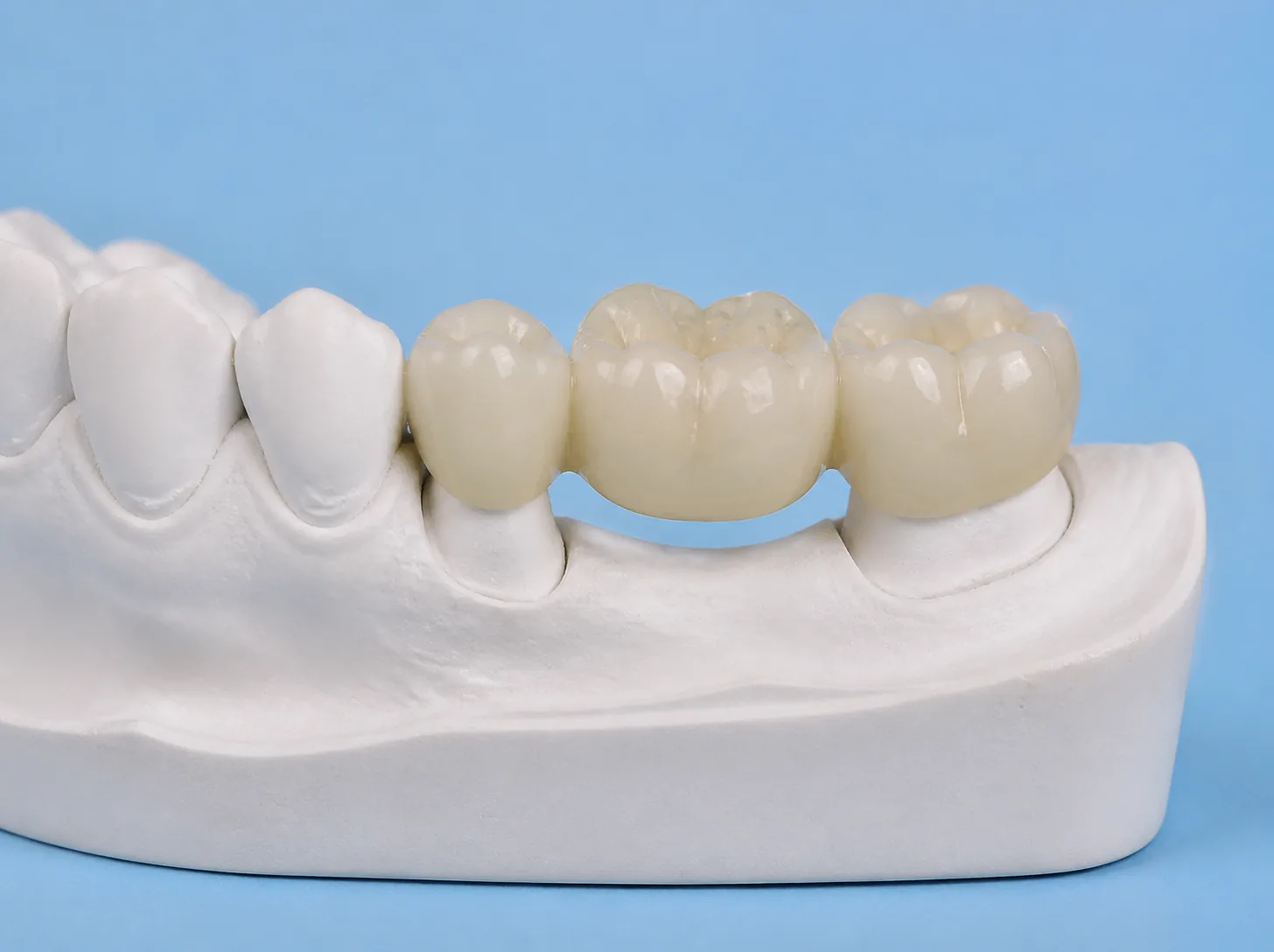
A simple extraction removes a tooth that cannot be saved, with the area fully numbed. Nobody wants to lose a tooth, so it is only recommended when keeping it would do more harm.
A tooth is removed when it can't be saved: decay that destroyed too much of it, a fracture below the gumline, advanced gum disease, or infection that keeps returning. A simple extraction means the tooth is visible and reachable, so no surgical cutting is needed. Impacted teeth, like many wisdom teeth, are referred to a specialist.
Sometimes a root is curved or anchored more firmly than the X-ray suggested, and a simple extraction turns stubborn. That's a known part of this work, and your doctor will tell you plainly where things stand.
Extractions can also be part of an orthodontic plan, usually of healthy teeth, when there isn't room to correct the bite well otherwise. Your doctor looks for a plan that keeps every tooth first, and any extraction is discussed with you before it's scheduled.
After a tooth comes out, the bone that held it starts to shrink. Your doctor usually places bone graft material in the socket at the same visit to preserve it, which matters most if an implant may come next.
You'll feel pressure and rocking as the tooth loosens, not sharp pain. Raise a hand if anything feels sharp. Afterward you bite on gauze to help a clot form, and you leave with written aftercare instructions.
Soreness and swelling peak in the first day or two. Eat soft foods, and skip straws, smoking, and hard spitting for several days to protect the clot. If there are signs of infection, your doctor may prescribe an antibiotic, plus an anti-inflammatory for pain and swelling.
Call the office if pain worsens after the third day instead of improving, if swelling keeps growing, or if you develop a fever. We would rather hear from you early than treat a complication late.
The area is fully numbed, so you feel pressure and movement but not sharp pain during the procedure. Soreness afterward is normal and usually manageable with the aftercare plan your doctor gives you.
Most people are back to their normal routine in a day or two, eating soft foods at first. The socket itself takes longer to fill in fully, which happens quietly over the following weeks.
Dry socket is severe pain that starts a few days after the extraction, caused by losing the protective blood clot too early. Avoid straws, smoking, and vigorous spitting or rinsing for several days. Call the office if pain worsens after day three.
Usually yes, and planning for it is part of the treatment. Left empty, the space lets the neighboring teeth tip into it, and the opposing tooth can over-erupt, drifting toward the gap from the other jaw. That changes how your teeth meet.
Your doctor will walk through the options: a bridge made here, a partial denture we scan for here, or an implant placed by a specialist. The exceptions are wisdom teeth and planned orthodontic extractions, where the space is meant to close.
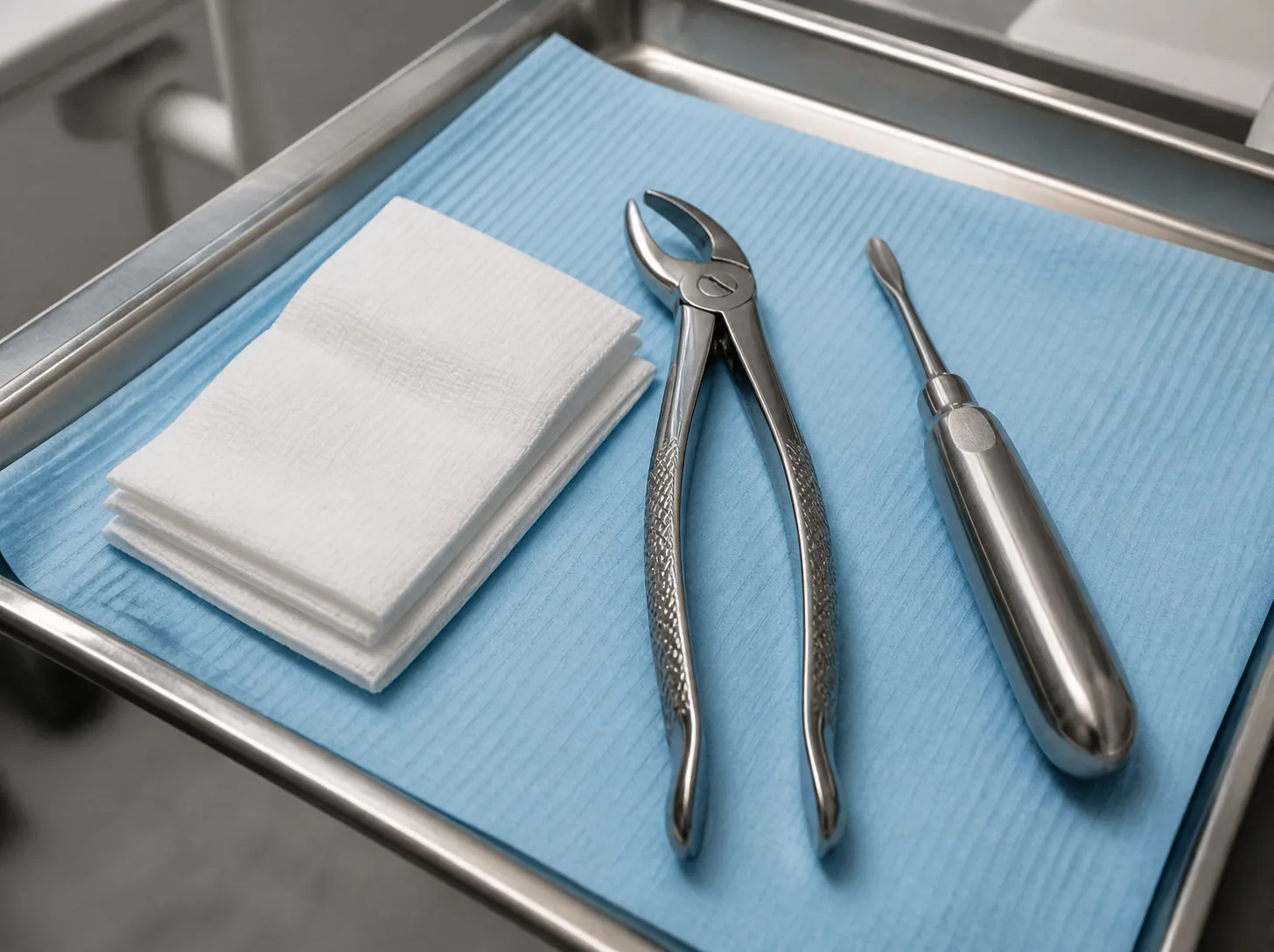
Professional whitening lifts stains and brightens your smile beyond what store products can do, with a dentist supervising the whole thing.
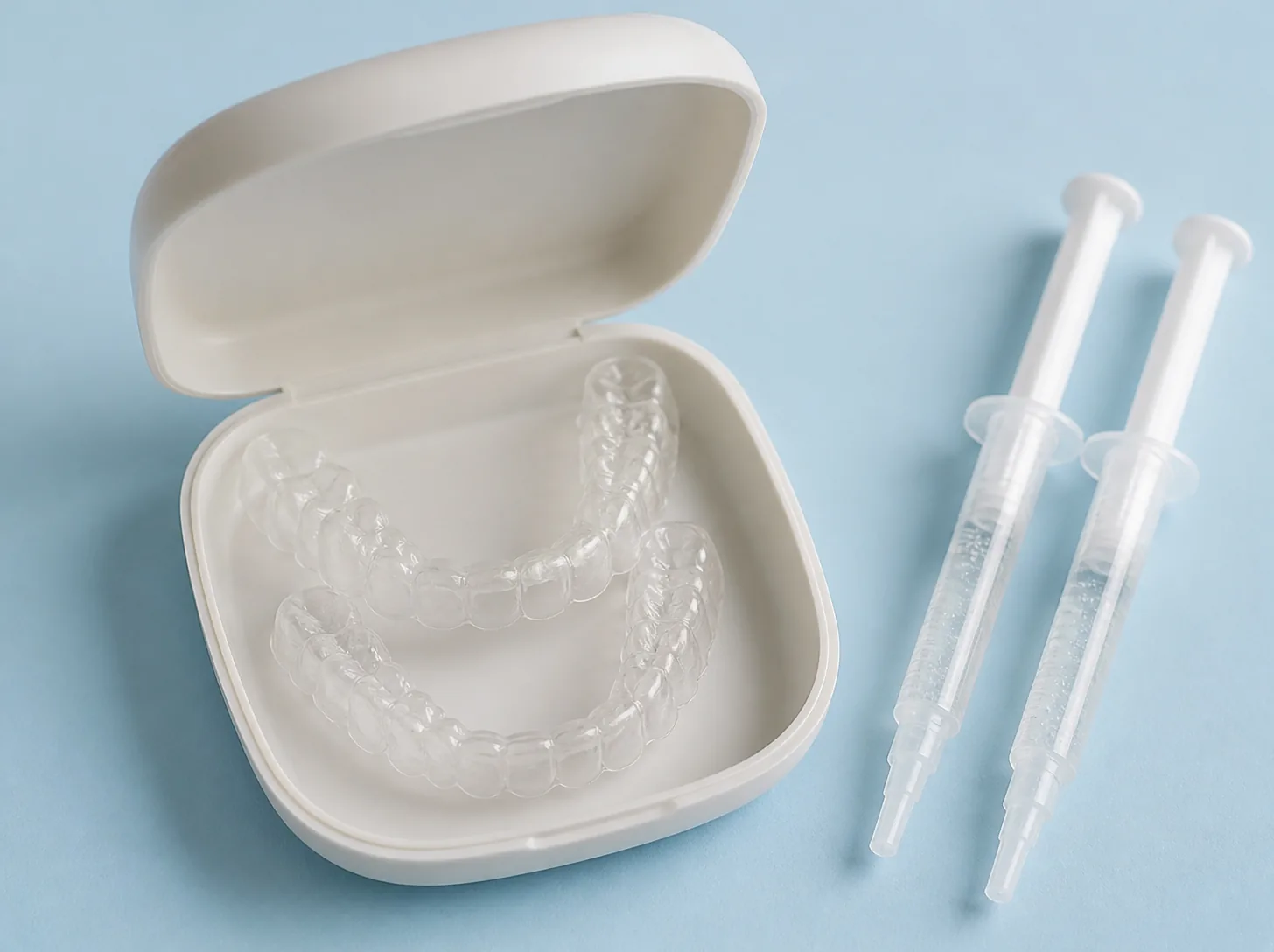
Professional-strength gel breaks up stain molecules in the enamel, either in the office or at home with custom trays. Your gums are protected either way.
Yellow and brown stains from coffee, tea, and age respond best. Gray tones, tetracycline stains, and discoloration from inside the tooth are less predictable. White spots from fluorosis or early enamel changes don't fade and can stand out more at first, so your doctor screens your teeth and sets expectations before recommending anything.
In-office whitening takes about an hour. Your gums are protected first, the gel goes on in rounds, and you leave the same day with the result. Some sensitivity during treatment and for a day or so after is common, and it fades.
Take-home trays work more gradually: you wear them on the schedule your doctor sets, usually over one to two weeks, and you can stop when you reach the shade you wanted.
It can, for a day or two. Sensitivity during and shortly after whitening is common and fades. If your teeth are already sensitive, tell your doctor beforehand so the plan can account for it.
It depends on your habits. Coffee, tea, red wine, and smoking restain teeth over time. Most patients see a clear result hold for many months, and take-home trays make touch-ups simple.
No. Whitening gel works on natural enamel only, so existing crowns and composite fillings keep their shade. If a restoration sits on a front tooth, your doctor will talk through how that affects the plan before you start.
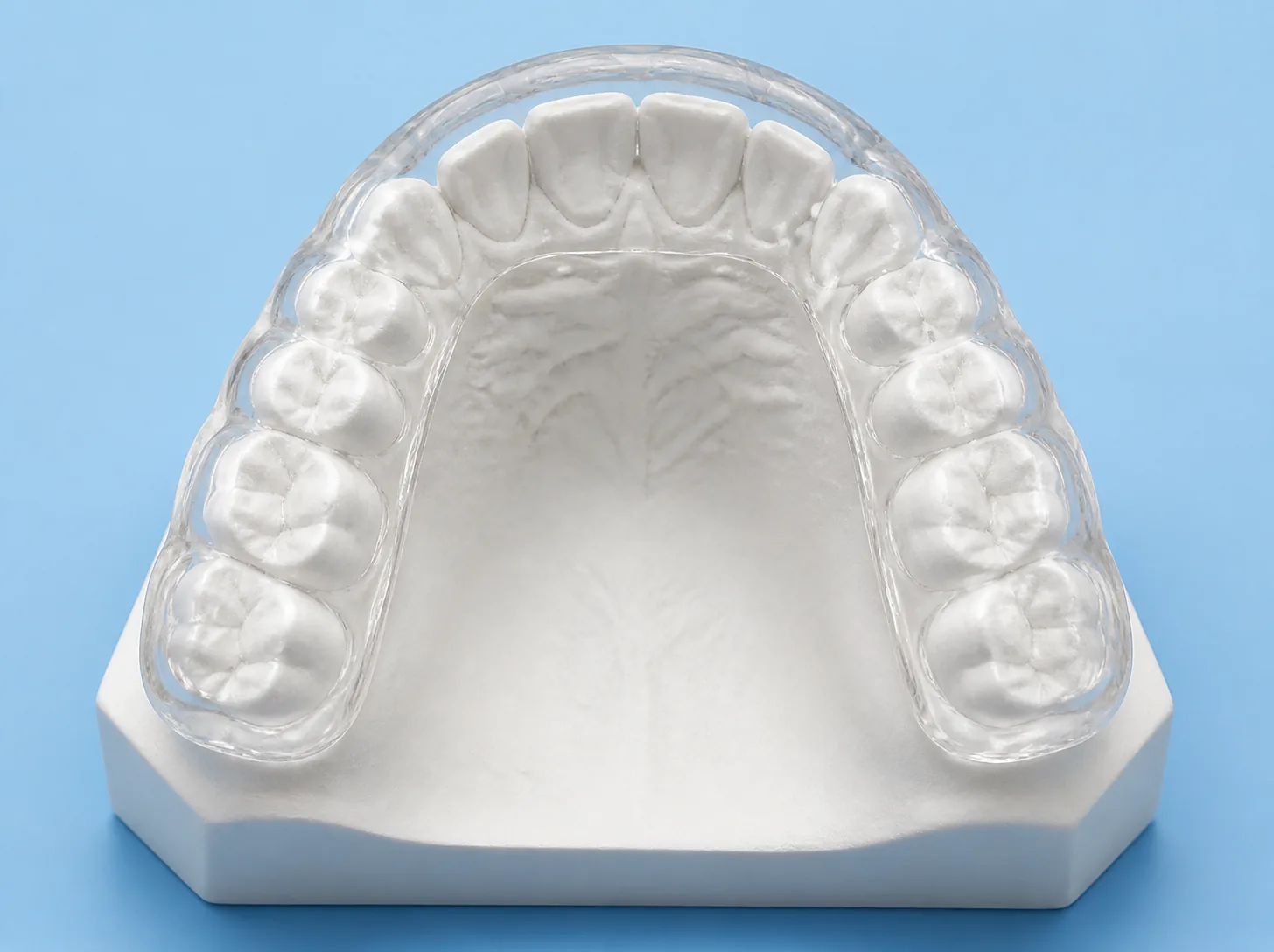
If you clench or grind in your sleep (bruxism), a night guard takes the force that would otherwise wear down enamel and chip teeth, fillings, and crowns. It usually covers the upper teeth and is much thicker than a retainer, so it holds up to grinding night after night.
Many people grind without knowing it. Common signs are flattened or chipped teeth, a sore or tired jaw when you wake up, morning headaches, and a partner who hears the grinding at night.
A guard doesn't stop the grinding itself. It takes the wear in place of your teeth, fillings, and crowns. Heavy grinders usually do best with a hard guard, and some patients prefer a dual-layer guard, soft on the inside and hard on the outside. Your doctor recommends the type for your bite.
First, a quick 3D scan of your teeth, with no impression material. The lab makes the guard from that scan. At the fitting visit your doctor checks that it seats fully and adjusts how your teeth meet on it, so your jaw rests evenly. It may feel snug for the first few nights, and most people get used to it within a week or two.
No. Grinding is mostly tied to stress and sleep, and a guard doesn't change those. What it does is protect your teeth and restorations from the damage grinding causes.
Rinse it in cool water every morning, brush it gently with a soft toothbrush and mild soap, and let it air-dry in its case. Skip toothpaste, which scratches it, and hot water, which can warp it.
Often 2 to 5 years, depending on how hard you grind. Bring it to your checkups so the fit and wear can be checked. Because we keep your scan, a replacement can be made from it.
A store-bought guard is better than nothing, but it fits loosely and is often bulky, and heavy grinders can wear through it quickly. A custom guard made from your scan fits exactly, stays in place, and holds up longer.
Slide through the ages to see when baby teeth leave and adult teeth come in. It's why we like a first visit around age six to seven.
We accept certain PPO plans. Call or text us your plan, and we'll check your benefits before your visit.
Toothache, swelling, or a broken tooth? Call or text us. The office is open on set office days, so if we can't see you in time, we'll refer you to a nearby office.
Exams, cleanings, fillings, crowns, bridges, simple extractions, whitening, and night guards. We also scan for partial dentures here, and the lab makes them.
Root canals, implants, and impacted wisdom teeth. Your doctor explains why and makes the referral.
Tell us. Your doctor explains each step before it happens, and you can raise a hand to pause anytime. Numbing is done with local anesthetic. The office doesn't offer nitrous oxide (laughing gas) or sedation.
Our staff speaks Spanish. Call or text in whichever language you prefer.
Call or text the office at (562) 904-6930, or email [email protected]. Visits are by appointment on set office days each month.
General visits are seen on the same office days as orthodontics.